Infinite Hues: Multicolor Woodblock Printing in Late Ming China
For more than a thousand years, Chinese society has used woodblock printing to convey a wide range of practices. The practice has remained prevalent throughout Chinese history because it efficiently transferred knowledge. First, cutting into woodblocks to reveal texts, the practice shifted from solely religious purposes to that of creating manuals, instruction books, and information on the sciences. While the practice slowly declined after the Song Dynasty’s production boom, the craft returned to fashion during the Ming era. This rebound of popularity saw printing in combination with prevalent methods of commercialization and mass production, pushing the bounds of the audience and utility of the craft even further than before. As commercialization and demand for books increased, new techniques emerged to lower print prices or improve product quality. One such innovation was multi-color printing. These new methods built on rudimentary Song dynasty techniques, refining existing color-printing methods and allowing for gradience to be present in these works. The quintessential work symbolizing this era of multicolor printing was the Ten Bamboo Studio Manual, an art manual curated by artist Hu Zhengyan in 1633. Although color printing existed before the Ming dynasty, this innovation, along with the commercialization of printing and the refinement of multicolor methods, enabled artisans to reproduce painting colors more accurately and circulate painting manuals in books.
Before the Ming dynasty, color printing existed, but in a rudimentary form. One of the earliest forms of such printing was in the 12th century. The work is said to have been created using a single woodblock with multiple different colors. This method, called dolly printing (yiban duose), is said to have evolved from hand-colored prints. This early method emphasized applying multiple colors to a single block. However, in the late Ming, publishing families, especially in the southern and coastal regions, developed and produced hundreds of color works in the 16th century. These works varied from two to five colors, including solid colors. Tone and gradients began to take shape in the 1620s, when a new style called the assembled block method (douban) emerged. This process used multiple woodblocks to produce a single piece. Each block was used for a specific color and applied sequentially. This process later enabled the mastery of gradients, which was essential for prints in painting manuals where color detail mattered. Only in Hu Zhengyan’s Ten Bamboo Studio Manual was this method used entirely.
Hu Zhengyan was from Huizhou, a region that is in modern-day Anhui province. Coming from a region with a strong printing culture, many Huizhou natives moved to Nanjing because of the area's strong commercialization and printing tradition. Specifically, numerous publishing groups allowed these prints to take shape. In such an urban, commercialized area, specialization was crucial to ensure every step of the process was completed. Many Nanjing works had multiple contributors. For example, in an illustrated edition of Xiuru ji, an individual dubbed Liu Suming is noted as having engraved the work, despite his seal emphasizing his involvement in the craft's image angle. Liu Suming’s involvement in both drawing and engraving shows how these skills overlapped in woodblock print production; the process itself shows how these skills were eventually used to reproduce the colors and shades of painting.
The Ten Bamboo Studio Manual utilizes the 饾版 (douban) printing process. The method uses separate blocks for each color. This method was often used to reproduce works, especially paintings and calligraphy. To preserve the precision of these original works, carvers carved different designs into different blocks, each associated with a color. To preserve the detail of these reproductions, carvers emphasized their skill, as their handling of the wood dictated the marks in the final product. Early multicolor printing initially used equal amounts of ink on a single block. As the practice evolved, artists expanded the range of detail by experimenting with variations in ink colors. Artisans realized that brushing mixed ink across a single print allowed colors and gradients to show in the result. They placed each block onto the final print paper in sequence to complete the image. This was an intricate process, as each block had to align with the previous block’s imprint to keep the image neat. Combined with the boom in commercialization in Nanjing at the time, this innovation allowed prints and manuals to recreate the shades and tones of brushstrokes better. Throughout the process, the carvers' and printers' specializations came together to ensure the image maintained the composition of the intended work for accurate use. This medium therefore relied on these crafters' judgment, affecting how closely the portrayed brushwork and paintings matched the original.
These techniques are ever-present in the Ten Bamboo Studio Manual, whose intricacies allow for a clean recreation of a painting and its color gradients. In this print depicting branches of a fruit tree (fig. 1), the fine lines of detail, along with the soft gradients in almost every object, show how woodblock printing could recreate the appearance of paintings. Immediately, the composition draws attention to the hues. The solid, heavy green hues of the leaves and the fine lines within them immediately contrast with the blank background. Complementing the solid leaves are the yellow hues of the fruit, softened by a lightened gradient. The sharp rocks, in both a literal and color-theory sense, juxtapose the branches. With no solid color, the yellow fruit fades into the background, emphasizing a plump, volume-heavy shape. The look suggests using varying amounts of ink, then brushing it across the surface to create a gradient. Again, this simulates the uneven variation of a brushstroke on paper, guided by the printer’s expertise. On the flip side, the rocks to the left of the branches use green, gray, and yellow to create contrast between shades and give the object composition a sense of rigidity. This juxtaposition, one soft and the other rigid, points to the newfound versatility showcased in the gradients of multi-color printing; it can effortlessly imitate the intricacies of varying objects. Placed over the solid green hues of the leaves, the thick, fine lines representing the plant's veins paint a similar picture. Beyond the fine lines, the branches include small, intentional oddities that suggest nature's natural quirks. These features add texture to the objects, emphasizing the importance of the carver’s lines and the printer’s use of ink and color in creating the final image. All in all, this work shows how different painting techniques (contrast, gradience, and fine lines) could be masterfully reproduced in woodblock printing, allowing books to transmit visual representations of painting; by replicating the visual qualities of paintings, carvers and printers shaped how artistic knowledge was exchanged through prints.
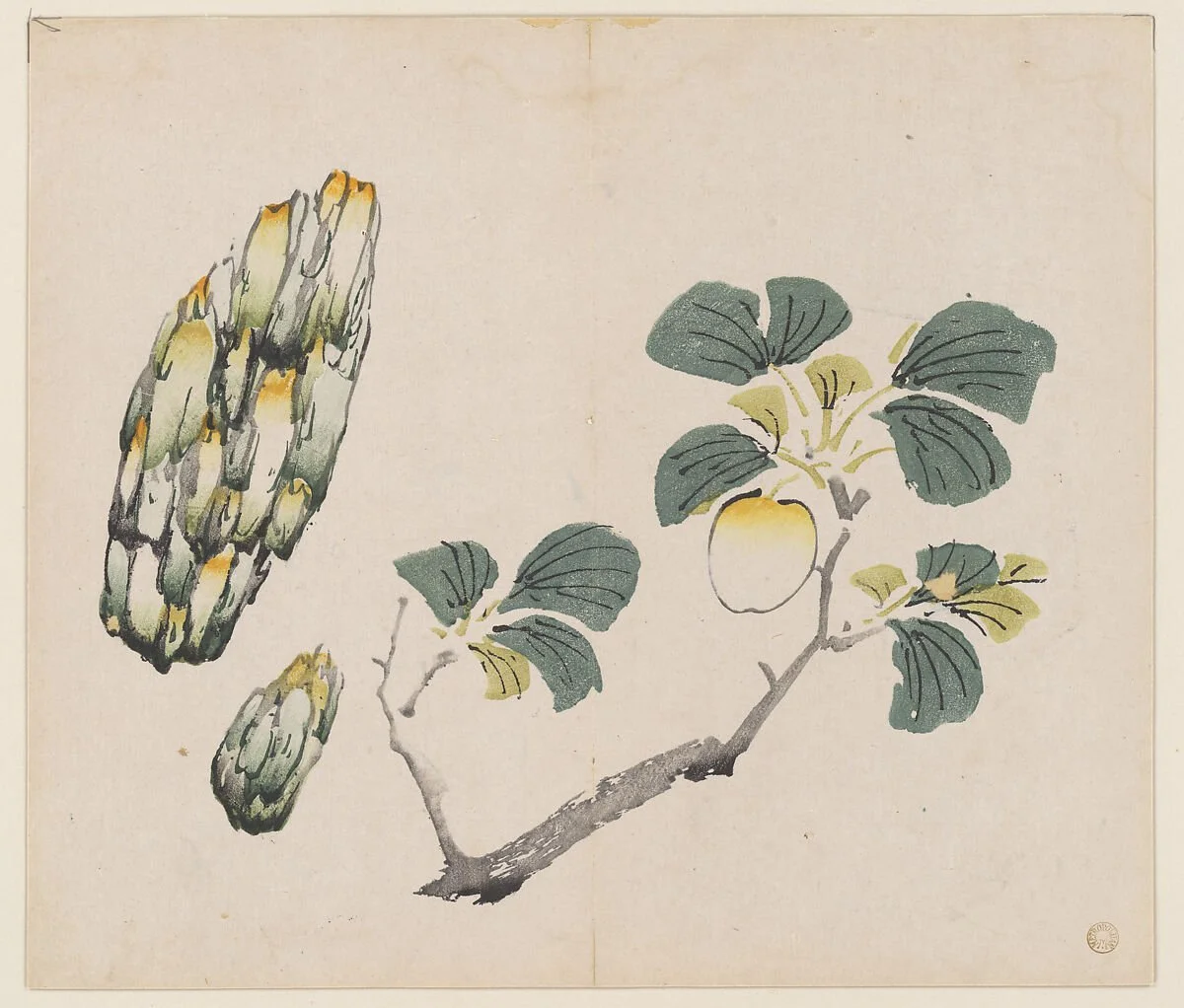
Figure 1. Page from the Ten Bamboo Studio Manual of Painting and Calligraphy. Illustrated by Hu Zhengyan and others; first edition printed in 1633. Ink and color on paper. The Metropolitan Museum of Art.
The studio manual reveals how multicolor woodblock prints catered to audiences who valued artistic quality or the piece's craftsmanship. Although the title advertises the work as a manual, Bieberly argues that its contents suggest audiences read the book for pleasure rather than technique. Bieberly makes this argument by directly contrasting it with another work, the Mustard Seed Garden Manual, published in 1679. The Ten Bamboo Studio image contains no text describing the work. In contrast, the Mustard Seed Garden Manual largely focuses on the fundamentals of painting. Therefore, if artistic application was not the goal, then artistic appreciation by audiences as a whole is a central purpose. This is supported by the fact that fewer than 30% of the artistic works in the manual are accompanied by texts that provide instructions for reproduction. Building on the expert craftsmanship showcased by the multicolor printing process, the presence of calligraphy also highlights how these prints converged literary knowledge with practical skills. The deeper intricacies lie beyond the art and in the lettering itself. Moving beyond the standard lettering of the time, the multiple forms of letters may have appealed to audiences interested in craftsmanship. More broadly, the work could also represent illustrious books decorated to convey themes of wealth and knowledge, traits readers hoped to possess. This is supported by the notion that while early editions of the work were presumed too expensive for the middle class, the increase in editions over time suggests its popularity alongside sustained trends of commercialization. Ultimately, the development of multicolor woodblock printing expanded the circulation of art, especially painting and calligraphy, as craftsmanship, commercial demand, and economic inequalities shaped how audiences valued the works themselves.
Endnotes
LIN, HANG. “INTERSECTING BOUNDARIES: MANUSCRIPT, PRINTING, and BOOK CULTURE in LATE MING CHINA.”, 266.
Ibid.
Bieberly, Rebecca. “Envisioning Prints as Paintings: Folios From Chinese Art Books in the Detroit Institute of Arts.”, 26.
Bieberly, 22, 26.
Needham, Joseph, and Tsien Tsuen-Hsuin. Science and Civilisation in China: Volume 5, Chemistry and Chemical Technology, Part 1, Paper and Printing, 280.
Tsien, 283.
Bieberly, 26.
Tsien, 283.
Chia, Lucille. “Of Three Mountains Street: The Commercial Publishers of Ming Nanjing.”, 110–12, 126.
Chia, 125.
Tsien, 277.
Bieberly, 26–7.
Tsien, 277.
Bieberly, 26.
Bieberly, 23.
Bieberly, 22–23, 29.
Bieberly, 30.
Bieberly, 29–30.
Lin, 283.
Lin, 276.
BibliographyBieberly, Rebecca. “Envisioning Prints as Paintings: Folios From Chinese Art Books in the Detroit Institute of Arts.” Bulletin of the Detroit Institute of Arts 92, nos. 1–4 (2018): 20–35. https://doi.org/10.1086/701456.
Chia, Lucille. “Of Three Mountains Street: The Commercial Publishers of Ming Nanjing.” In Printing and Book Culture in Late Imperial China, edited by Cynthia J. Brokaw and Kai-Wing Chow. Univ of California Press, 2005.
LIN, HANG. “INTERSECTING BOUNDARIES: MANUSCRIPT, PRINTING, and BOOK CULTURE in LATE MING CHINA.” Oriens Extremus 52 (2013): 263–304. https://www.jstor.org/stable/26372418.
Metmuseum.Org. “Illustrated by Hu Zhengyan - Page From the Ten Bamboo Studio Manual of Painting and Calligraphy - China - Ming Dynasty (1368–1644) - the Metropolitan Museum of Art.” 2026. https://www.metmuseum.org/art/collection/search/63403.
Needham, Joseph, and Tsien Tsuen-Hsuin. Science and Civilisation in China: Volume 5, Chemistry and Chemical Technology, Part 1, Paper and Printing. Cambridge University Press, 1985.