Manufacturing Whiteness: The Craft of Face Powder and Ideals of Beauty in Ming China
Introduction
In China, we have an ancient saying, “white complexion is powerful enough to hide three flaws” (一白掩三丑). This expression reflects the longstanding cultural association between pale skin and feminine beauty in Chinese society. The obsession with pale skin is seen in every perspective in Chinese society. In the Chinese entertainment industry, female celebrities are frequently portrayed with exceptionally fair complexions. Many Chinese cosmetic companies market products, ranging from whitening creams to face powders, designed to brighten skin tones and create fairer complexion. This preference did not emerge out of nowhere but has deep historical roots in Chinese society. One of the earliest literary references to fair skin as an ideal of feminine beauty can be found in the Classic of Poetry (Shijing). In the poem “Shuo Ren,” the description “her hands are as soft as young shoots, and her skin as pale as congealed fat” illustrates how a light, delicate complexion was celebrated as a desirable feminine attribute in early Chinese society.¹ Much like modern foundation powders, women in imperial China used a cosmetic substance known as fen (粉), or face powder, to create the appearance of a paler and more even complexion. By the late Ming dynasty, the production and use of facial powders had become subjects of both technical and cosmetic literature. The Exploitation of the Works of Nature (Tiangong Kaiwu, 天工開物), a technological encyclopedia published by Song Yingxing in 1637, documents the production of hufen (胡粉) from a systematic manufacturing process and ultimately turn it into a market product. Meanwhile, Embellishing Appearances with Fragrant Cosmetic Cases (Xianglian Runse, 香奩潤色), a collection of cosmetic recipes and bodily care practices compiled by the late Ming publisher Hu Wenhuan, records 23 methods for preparing facial powders and skincare products intended to enhance the complexion. Examined together, these two texts offer different perspectives on the relationship between cosmetic craftsmanship, commercial production, and prevailing standards of feminine beauty in late Ming China. Through an examination of both texts, this paper argues that the pursuit of pale skin in Ming China was not merely an aesthetic preference but a socially constructed ideal shaped and reinforced by commercial interests, cultural traditions, and social hierarchies. While the production and commercialization of whitening cosmetics responded to existing beauty standards, they also rein forced in at the same time under a broader economical and social framework.
The Ming Beauty Standards and Whiteness
To begin, it is important to understand what fair skin meant in Ming China. Fair skin was widely celebrated in literary representations of idealized women, often associated with elegance and physical beauty. The late Ming–early Qing writer Li Yu, in his Xianqing Ouji, remarked, “Among the natural qualities of a woman, fair skin is the most difficult to attain. Even when her eyebrows, eyes, mouth, and teeth are all as beautiful as a painting, her complexion alone may remain a flaw.” ² Similarly, the Ming poet Jiang Yuan described an idealized woman as “graceful and elegant, with a slender neck and skin as white as jade.” ³ However, the ideal of feminine beauty promoted by some Ming literati was not simply about achieving the lightest fairest possible complexion, but rather reflected an appreciation for understated elegance and natural-looking beauty (suya). As shown in the Figures 1 & 2 below, opposed to the Tang dynasty woman with elaborate facial decorations and an extravagant makeup, the Ming dynasty woman appears with a much more subdued complexion, delicate eyebrows, and minimalist makeup. In this sense, the ideal of whiteness in certain Ming representations was not merely about the lightness of one's complexion, but also about cultivating an appearance that seemed natural, elegant, and appropriately restrained. Some scholars have associated this preference for understated elegance with the influence of Neo-Confucian ideals of propriety and moderation during the Ming dynasty. Confucian thought emphasized self-restraint and moderation, encouraging individuals to regulate their desires and conduct themselves according to established social norms. Within this cultural context, a natural-looking style of makeup was celebrated, characterized by a fresh complexion, and subtle minimalist cosmetic enhancements.⁴ The ideal was a graceful and understated appearance, comparable to what might today be described as “no-makeup makeup.” From this perspective, the pursuit of a fair complexion in Ming China was not merely a matter of physical attractiveness, but also a reflection of broader cultural ideals surrounding femininity and moral propriety. A pale and seemingly natural complexion could therefore serve as a visual expression of elegance and restraint, suggesting that beauty was shaped not only by aesthetic preferences but also by the social expectations placed upon women.
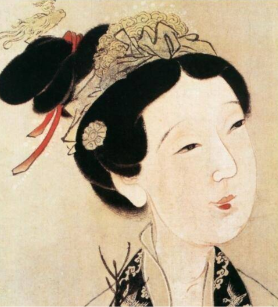
Figure 1. Tang Yin (1470–1524), Chang'e Holding a Cassia Branch,
Ming dynasty, ink and color on paper, 135.3 × 58.4 cm,
The Metropolitan Museum of Art, New York (detail).
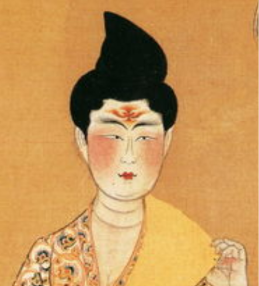
Figure 2. Anonymous, Dancer (舞圖), Tang dynasty, ca. 702 CE. Color on silk, 51.5 × 25 cm. Excavated in 1972 from the tomb of Zhang Lichen (655–702) at the Astana Cemetery, Xinjiang. Collection of the Xinjiang Uighur Autonomous Region Museum, China.
The Manufacturing of Whiteness
The production of face powder was documented in numerous Ming-dynasty texts, with different accounts reflecting varying scales of production and areas of emphasis. A notable example is The Exploitation of the Works of Nature (Tiangong Kaiwu, 天工開物), written by Song Yingxing in 1637.⁵ The book documents a wide range of practical technologies and manufacturing processes during the late Ming dynasty, including agriculture, metallurgy, and other specialized crafts. Unlike traditional scholarly works that primarily emphasized moral philosophy and abstract intellectual discourse, Tiangong Kaiwu focused on the practical knowledge and technical processes underlying material production. Among the many manufacturing techniques documented in the text is the production of lead-based face powder called hufen. According to the Tiangong Kaiwu, the production of hufen involved several stages. One begins with one hundred jin of lead. First, lead was melted, shaped into thin sheets, and rolled into cylinders. These cylinders were placed in a sealed wooden vessel containing vinegar and heated for seven days. During this process, a white, frost-like powder formed on the surface of the lead. The powder was then collected and mixed with bean flour and powdered shells in water. After the water was removed, the mixture was spread over layers of paper, partially dried, and shaped into small blocks or tiles.⁵
One particularly striking detail in this account is the substantial quantity of lead required at the beginning of the process. The use of one hundred jin (133.3lb) of lead suggests that the method was intended for production on a relatively large scale rather than for individual domestic use. This interpretation is further supported by the final instruction, “待幹收貨” (allow it to dry before collecting the finished goods), suggests that the finished face powder may have been treated as a marketable product rather than merely a cosmetic preparation for personal use. ⁵ Moreover, at the end of the passage, Song Yingxing notes that “in ancient times, this substance was produced primarily in the prefectures of Chen and Shao, and was therefore known as Shao powder, although it was commonly misnamed Chao powder. By the time of writing, however, it was being widely produced throughout the provinces.” ⁵ This observation suggests that the manufacture of hufen was no longer concentrated in a few specialized production centers but had expanded geographically by the late Ming dynasty. When considered alongside the large quantities of raw materials and the treatment of finished powder as goods, this geographical expansion points toward an increasingly widespread and potentially commercialized system of cosmetic production. Rather than being produced exclusively within individual households, hufen may also have been manufactured by specialized workshops and craftsmen for sale in the market. Evidence of the commercial availability of face powder can also be found in Jin Ping Mei, a late Ming novel frequently studied for its portrayal of everyday life and material culture. In one scene, a woman asks someone to watch for a powder seller passing by her doorstep, only to be told that the seller had already passed earlier that morning.
“Brother Fu, I beg you, please keep an eye out for the powder seller passing by my doorstep.”
“Sister-in-law, the powder seller already passed by this morning…”
“The Fifth and Sixth Ladies inside the household asked me to buy some face powder for them…” ⁶
This exchange offers a glimpse into how cosmetic powder was represented as an accessible commercial product in late Ming urban life. Taken together with Tiangong Kaiwu, it shows that face powder production and distribution extended beyond domestic preparation and formed part of a broader commercial economy. The combination of specialized manufacturing techniques and representations of everyday purchasing practices elucidates the relationship between growing demand of face powder, craftsmanship, and market-oriented production in late Ming China.
The Remanufacturing of Whiteness
The growing commercial availability and popularity of face powder during the Ming dynasty may have also stimulated the development of related industries, particularly the publication of beauty manuals and cosmetic recipe books, a trend that may have been further facilitated by advances in papermaking and printing technologies during the Ming dynasty. These publications usually provided readers with additional instructions for preparing and modifying cosmetic products. With these cosmetic recipe books, some women would further process or combine purchased cosmetic materials to achieve their desired appearance. This suggests a second stage of cosmetic production, in which consumers themselves could participate in the remanufacturing of beauty products. Embellishing Appearances with Fragrant Cosmetic Cases (Xianglian Runse) compiled by Hu Wenhuan offers a particularly revealing example of this phenomenon.⁷ Rather than being exclusively a cosmetic manual, the text is a broader compilation of recipes and practical knowledge concerning women's beauty, personal care, health, and domestic life. In its section devoted to facial care, the text provides a recipe for Lihua Baimian Xiang (梨花白麵香), a compound face powder intended to brighten the complexion. The recipe calls for ten liang of guanfen (官粉), two liang of litharge, five qian of qingfen (輕粉), two liang of white sandalwood, one qian of musk, and five qian of shell powder. The instructions specify that the first three ingredients should be ground into a very fine powder, followed by the addition of musk. The mixture was then to be combined with egg white and water and applied daily to produce a bright, white complexion resembling pear blossoms, accompanied by a pleasant fragrance.⁷ Particularly noteworthy is the use of guanfen, a commercially available lead-based white powder closely related to hufen. Rather than representing an entirely separate method of cosmetic production, this recipe suggests that prepared cosmetic ingredients could serve as the foundation for additional stages of refinement and customization. ⁸⸴⁹
However, compared to Tiangong Kaiwu, Xianglian Runse appears to have been shaped more strongly by commercial considerations than by practical instruction. First, although the text provides numerous cosmetic recipes, there is limited historical evidence confirming whether these particular recipes were actually prepared or used by women during the Ming dynasty. Furthermore, unlike Song Yingxing, the scholar who compiled Tiangong Kaiwu to document technological and productive processes, Hu Wenhuan was actively involved in commercial publishing. His position as a publisher suggests that the compilation of Xianglian Runse may have been influenced by their potential appeal to readers and their commercial marketability. Evidence of this commercial orientation can be found within Xianglian Runse itself. Particularly noteworthy is the elaborate and sometimes extravagant, flamboyant naming of its cosmetic recipes, many of which invoke imperial courts, legendary beauties, and elite women. Examples include “Yang Guifei's Formula for Making the Face Radiant” (楊妃令面上生光方), “Consort Zhao's Secret Elixir for Giving the Complexion the Appearance of a Lotus Flower” (趙婕妤秘丹令顏色如芙蓉), and “The Eight-Whites Facial Cleansing Powder from the Jin Imperial Palace” (金國宮中洗面八白散方).⁷ If the primary purpose of Xianglian Runse was simply to provide practical instructions for cosmetic preparation, why would such elaborate and extravagant names be necessary? More importantly, the supposed association between these recipes and legendary beauties was not always historically substantiated. As Ji points out, a similar recipe had already appeared in the earlier Puji Fang under the much simpler title “Formula for Making the Face Radiant” (令面生光方), without any reference to Yang Guifei.⁹ Therefore, rather than merely communicating the functions or ingredients of these recipes, these titles evoke images of imperial luxury, legendary beauty, and exclusive knowledge. Such rhetorical embellishment would have been particularly useful in a commercial publishing context, where attracting readers' attention and distinguishing a publication from competing works could contribute to its marketability.
However, beneath this seemingly clever marketing strategy lies another important implication. As discussed earlier, Hu Wenhuan repeatedly associated his cosmetic recipes with imperial courts and aristocratic women, as though achieving a fairer complexion could allow ordinary women to resemble members of the elite. Interestingly, this association between pale skin and high social status was not entirely without historical precedent. As Johansson points out, fair skin historically served as a marker of social distinction, separating wealthy elites from impoverished peasants. In traditional Chinese society, where agriculture and manual labor played central roles, farmers and lower-class laborers often spent long hours working outdoors under direct sunlight, resulting in darker, tanned skin. In contrast, aristocrats, wealthy landowners, and other privileged members of society were generally less dependent on outdoor physical labor and could therefore more easily maintain a fairer complexion. Over time, pale skin became associated not only with physical beauty but also with wealth, leisure, and social privilege.¹⁰ Also Han et al. discovered that luxurious cosmetic consumption was closely connected to aristocratic status long before the Ming dynasty.¹¹ Viewed in this historical context, Xianglian Runse reflects the longstanding association between pale skin and social status, revealing how the pursuit of a fair complexion was intertwined with aspirations toward higher social standing. By invoking the beauty practices of the privileged classes, the text may have appealed not only to readers' desire for physical attractiveness but also to their aspirations toward wealth, refinement, and social prestige.
Beyond its commercial appeal, the branding of Xianglian Runse carries another important implication. By repeatedly associating cosmetic recipes with celebrated beauties such as Yang Guifei (Figure 3), one of China's Four Great Beauties, Hu Wenhuan's compilation presents these historical figures as models of ideal feminine beauty, and one particularly significant characteristic shared by these idealized representations is their association with pale skin, a recurring feature of traditional Chinese beauty standards. This longstanding association between pale skin and feminine beauty is further reinforced in the preface to Xianglian Runse, which states, “Women blessed with natural beauty possess skin as white as snow, faces as lovely as flowers, bones like jade, and flesh like ice, like Xi Shi and Yang Guifei. Even with their eyebrows only lightly painted, they naturally possess a captivating charm. Why, then, should they rely on cosmetics that might tarnish their natural beauty?” ⁷ Here, the author explicitly associates legendary beauties such as Xi Shi and Yang Guifei with snow-white skin and jade-like bodies, presenting fair complexions as defining characteristics of ideal feminine beauty. Then he proceeds, “Moreover, not every woman in the world is as beautiful as Xi Shi or Yang Guifei. It is for this reason that I have compiled this collection, hoping that it may offer some assistance in women's beauty and adornment.” ⁷ This rhetorical strategy closely resembles the problem–solution marketing in which an idealized standard is first established, followed by the identification of a gap between that ideal and the ordinary consumer. By presenting Xi Shi and Yang Guifei as embodiments of perfect feminine beauty while emphasizing that most women do not naturally possess such qualities, Hu Wenhuan implicitly creates a perceived need for cosmetic enhancement. His compilation of beauty recipes is then positioned as a potential solution to this perceived inadequacy. Therefore, Xianglian Runse does more than simply provide practical cosmetic knowledge; it also participates in constructing and reinforcing the very beauty standards that make such knowledge desirable and potentially marketable.
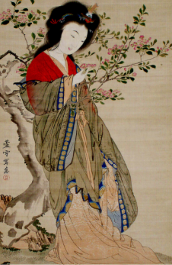
Figure 3. Nagasawa Rosetsu 長澤蘆雪 (1754–1799), Yang Guifei
楊貴妃圖), Edo period, Japan. Ink and color on silk, 122 × 56 cm.
http://home.catv.ne.jp/dd/possible/edokoukikiyoeigai.html.
What Manufactures Whiteness?
So what manufactures whiteness? At first glance, the answer seems straightforward. The craftsmen produce the cosmetic materials such as the face powder that could physically brighten one's complexion. However, when examined within the broader and more intricate historical context, whiteness emerges as something far more than a physical appearance created through chemical processes. Rather, it is a reflection of its time, shaped by the complex interplay of social hierarchies, cultural traditions, and commercial interests.Through Tiangong Kaiwu, we witness an increasingly widespread system of face powder production and a flourishing market driven by the high demand for fair complexions and the longstanding cultural preference for pale skin. Via Xianglian Runse, we see how, within the broader historical forces of the time, the ideal of whiteness was continuously reproduced and reinforced through the commercial interests of publishers and the deeply entrenched cultural values of Ming society. Whiteness did not simply emerge out of nowhere. It was constructed, promoted, and sustained by particular social forces. In this case, social hierarchies, the circulation of cultural ideals, and the commercial interests of certain groups all contributed to its reproduction. Yet beneath these interconnected forces lies a more fundamental question: who had the power to define beauty in the first place? The answer points toward those who possessed the authority and resources to shape cultural ideals: wealthy elites, influential poets and scholars, and commercial publishers who circulated and profited from these representations. But there is one more dimension that cannot be overlooked: gender. Notably, both Tiangong Kaiwu and Xianglian Runse, the two primary sources examined in this study, were written or compiled by men, and all these poets celebrating the ideal women with fair skins are men too. Although these texts describe cosmetic practices and ideals of feminine beauty, the perspectives of the women whose appearances were being discussed remain largely absent. This raises a critical question about whose voices shaped the standards of beauty that women were expected to pursue. Ultimately, the manufacture of whiteness was not merely a matter of producing cosmetics or promoting particular appearances, but also a reflection of the unequal distribution of cultural authority and the power to define what constituted beauty. Ultimately, whiteness in Ming China was not simply something manufactured in workshops or applied to women's faces. It was also an ideal continually constructed through the interaction of material production, cultural expectations, and commercial interests.
References
[1] Shijing 詩經 (Classic of Poetry), “Shuo Ren” 碩人, in “Wei Feng” 衛風.
[2] Li Yu 李漁, Xianqing Ouji 閒情偶寄 (1671), “Shengrong Bu: Xuanzi Diyi, Jifu” 聲容部·選姿第一·肌膚, Wikisource text
[3] Jiang Yuan 江源, “Meinv Pian” 美女篇 [A Poem on a Beautiful Woman], Ming dynasty, 古詩文網.
[4] Tang Choumo 唐丑末, “Mingdai Nüxing Fushi de Meixue Yanjiu” 明代女性服飾的美學研究 [Aesthetic Study of Women's Clothing in the Ming Dynasty] (master's thesis, Heilongjiang University, 2019), https://d.wanfangdata.com.cn/thesis/Y3567085.
[5] Song Yingxing 宋應星, Tiangong Kaiwu 天工開物 (1637), section on hufen 胡粉
[6] Lanling Xiaoxiaosheng 蘭陵笑笑生, Jin Ping Mei Cihua 金瓶梅詞話 [The Plum in the Golden Vase], chap. 23, “Yuxiao Guanfeng Sai Yuefang, Jinlian Qieting Cangchunwu” 玉簫觀風賽月房,金蓮竊聽藏春塢, https://www.donglishuzhai.net/chapter/8627.html.
[7] Hu Wenhuan 胡文煥, Xianglian Runse 香奩潤色, in Shouyang Congshu 壽養叢書 (late Ming dynasty), preface and cosmetic recipes.
[8] Li Shizhen 李時珍, Bencao Gangmu 本草綱目 (1596), entries on lead-based cosmetic powders.
[9] Xiaoqian Ji, “Embellishing Appearances with Fragrant Cosmetic Cases: Transforming Women’s Bodies to Nourish Life in the Late Ming,” Frontiers of History in China 14, no. 1 (2019): 137–62, https://doi.org/10.3868/s020-008-019-0007-1.
[10] Perry Johansson, “White Skin, Large Breasts: Chinese Beauty Product Advertising as Cultural Discourse,” China Information 13, nos. 2–3 (1998): 59–84, https://doi.org/10.1177/0920203X9801300204.Volume 13, Number 2-3
[11] B. Han et al., “The Rise of the Cosmetic Industry in Ancient China: Insights from a 2700-Year-Old Face Cream,” Archaeometry 63, no. 5 (2021): 1042–58, https://doi.org/10.1111/arcm.12659
