For the rework project, I am reconstructing a pork recipe recorded in the sixth-century agricultural treatise Qimin Yaoshu (齐民要术), attributed to Jia Sixie. The recipe involves repeatedly boiling pork to remove excess fat and unpleasant odors before steaming it with scallions, fermented soybeans, salt, ginger, and Sichuan peppercorns until it develops an amber color. I am interested in what this recipe can tell us about pork consumption and culinary preferences in early medieval China. Given that pork existed alongside other important meats, such as mutton, how important was pig and pig-farming in the contemporary times of Jim Sixie? Why does the recipe place so much emphasis on removing fat and unpleasant odors? Through reconstructing the recipe with modern ingredients and kitchen equipment, I hope to explore these questions while examining how closely the results correspond to the recipe's descriptions and instructions.
Reconstruction
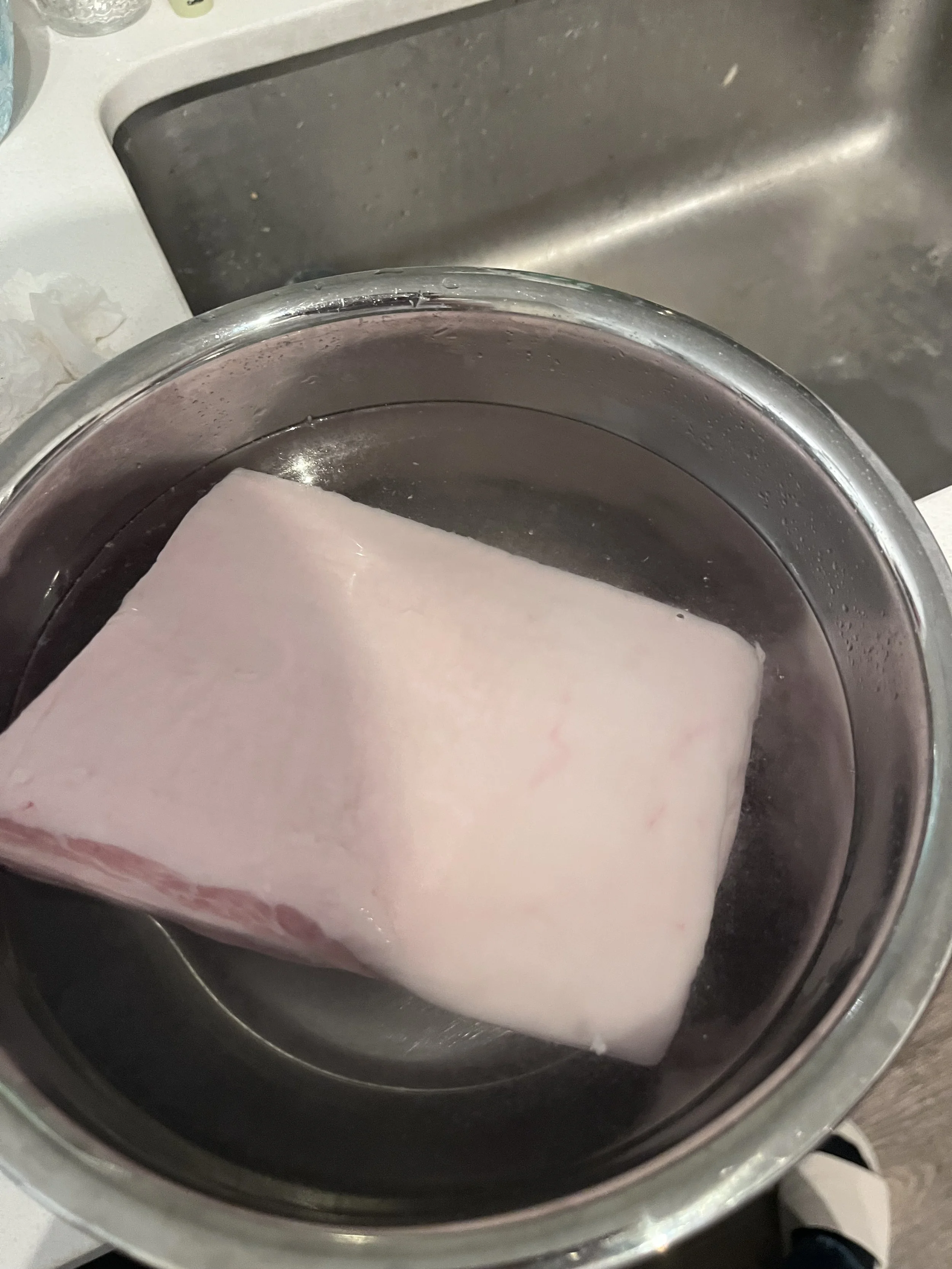
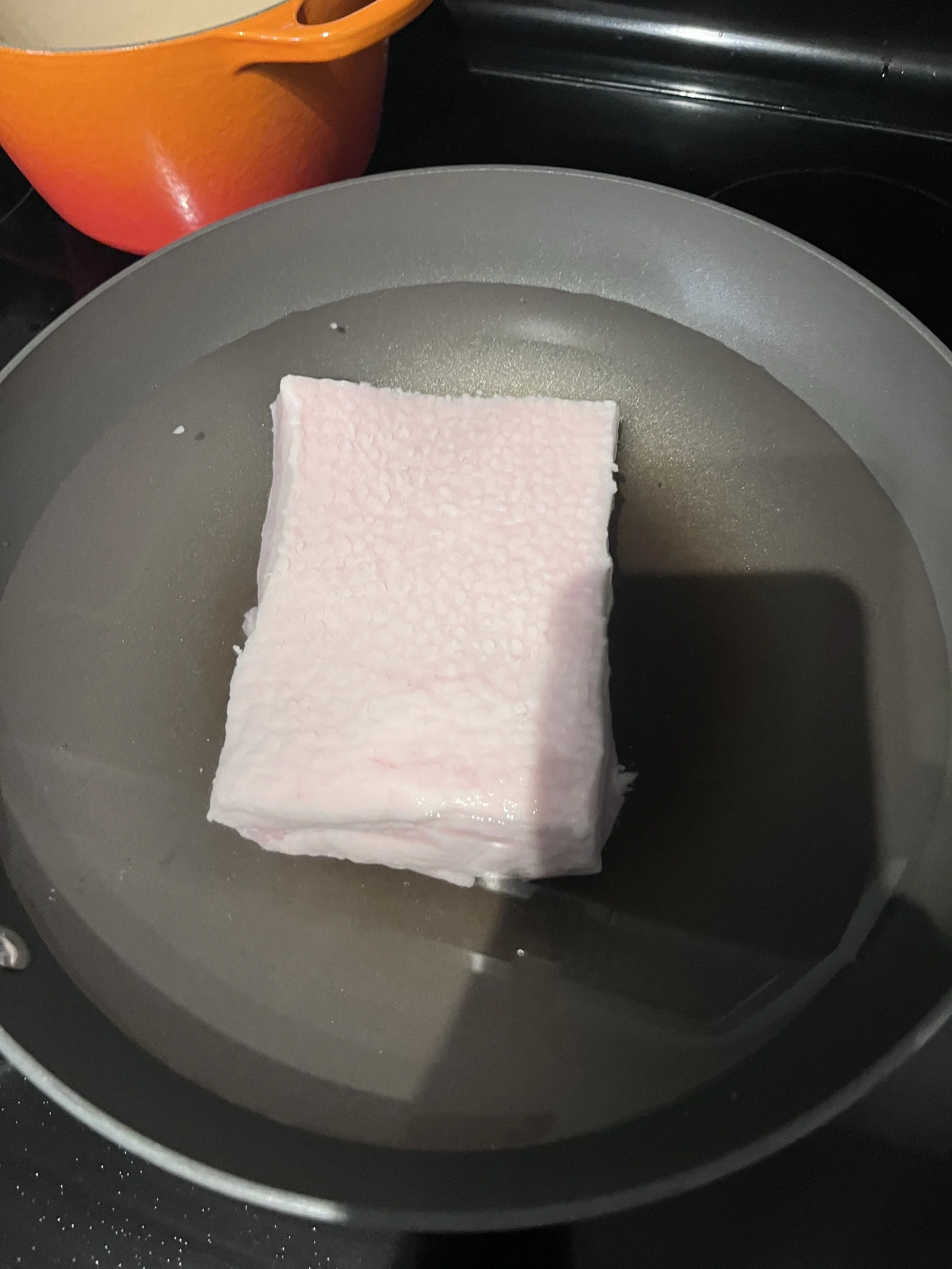
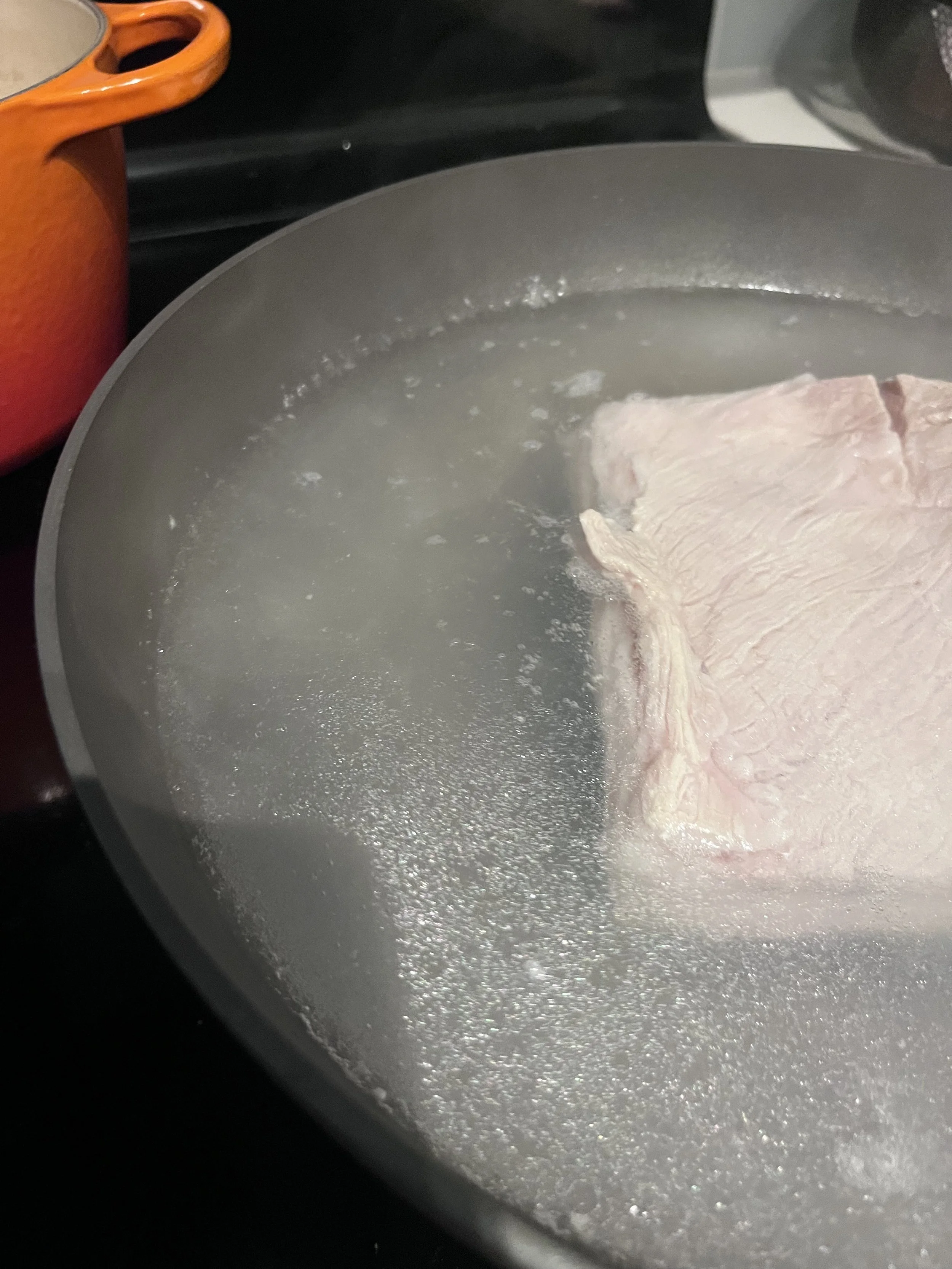
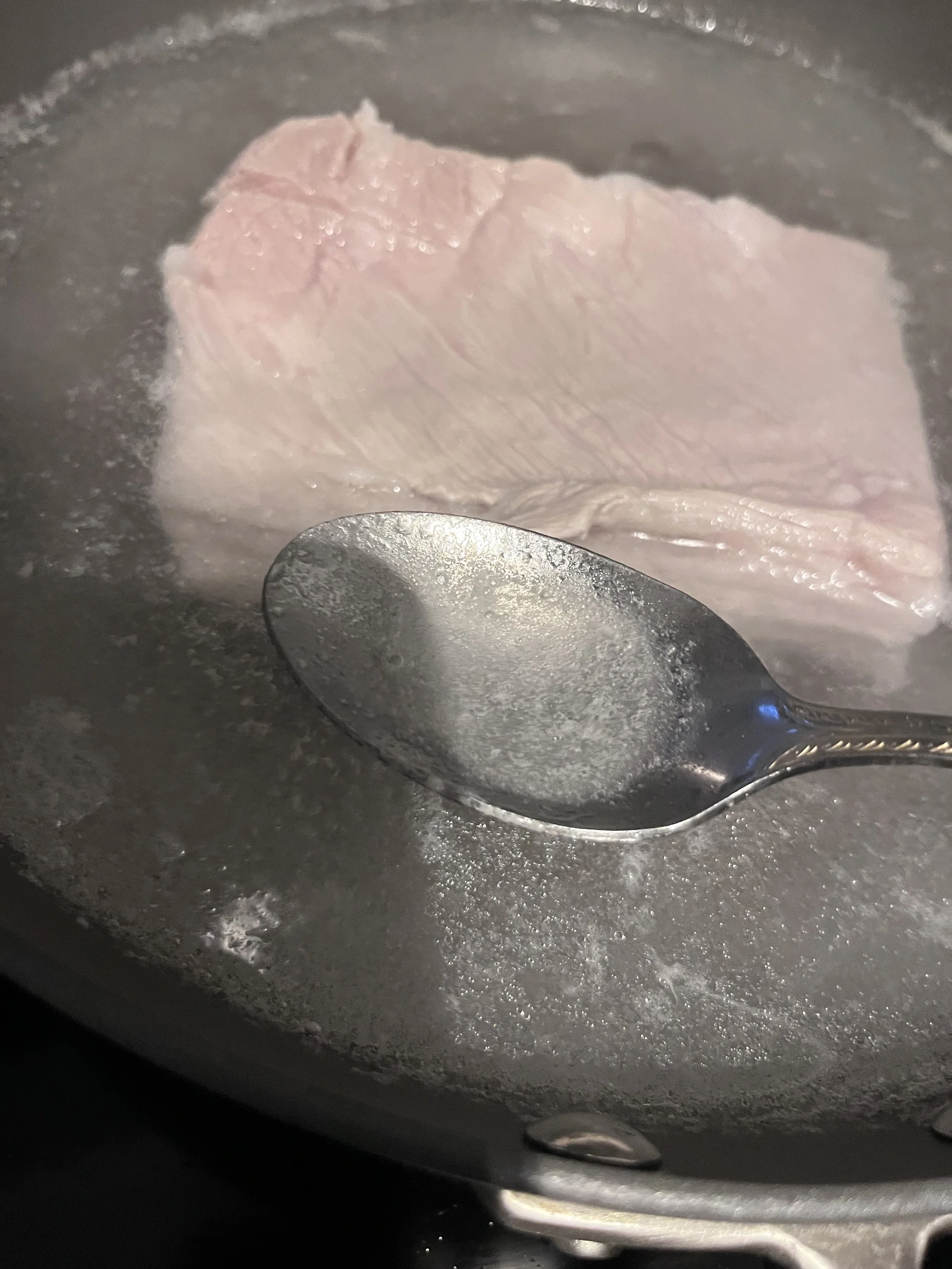
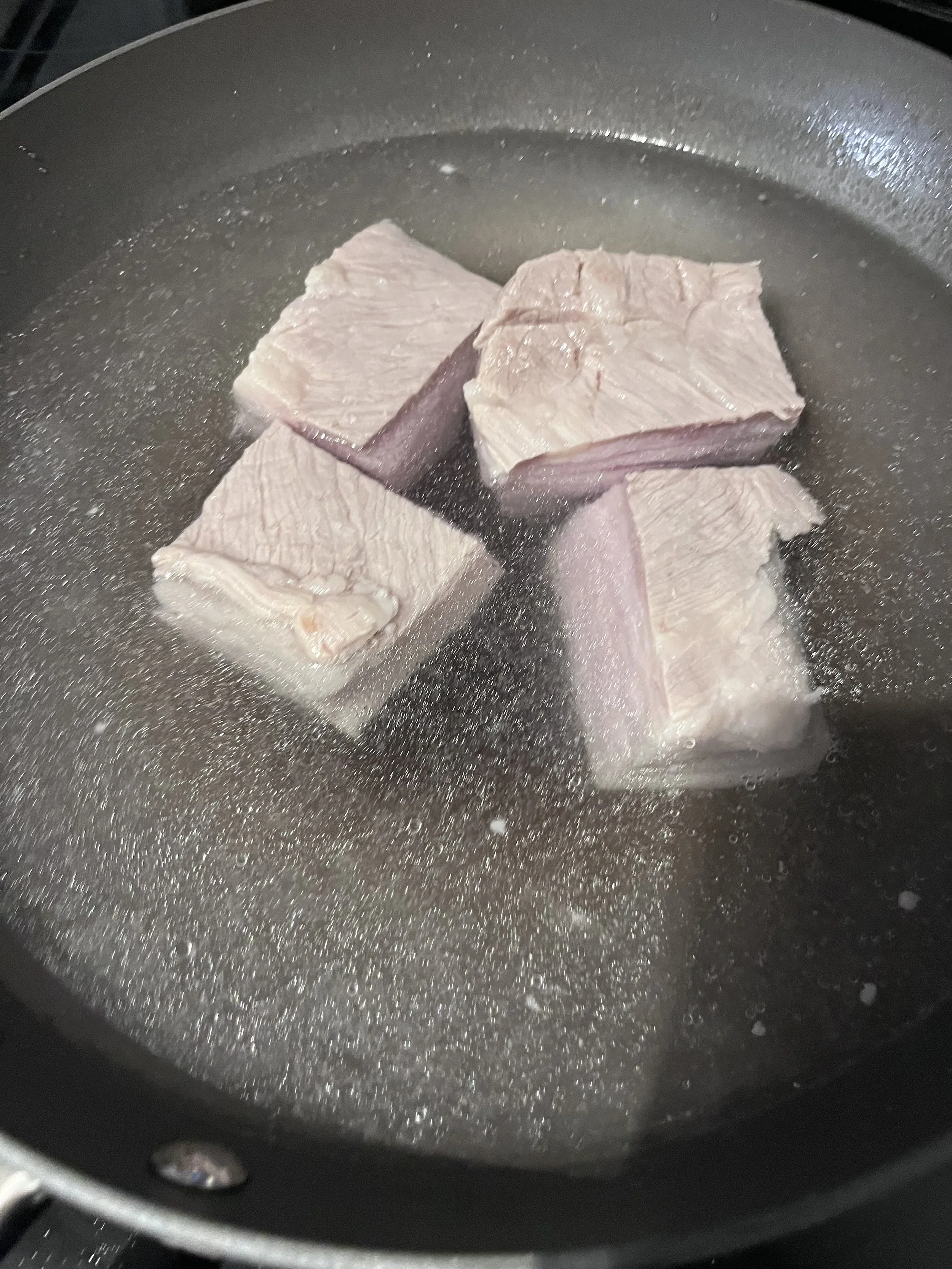
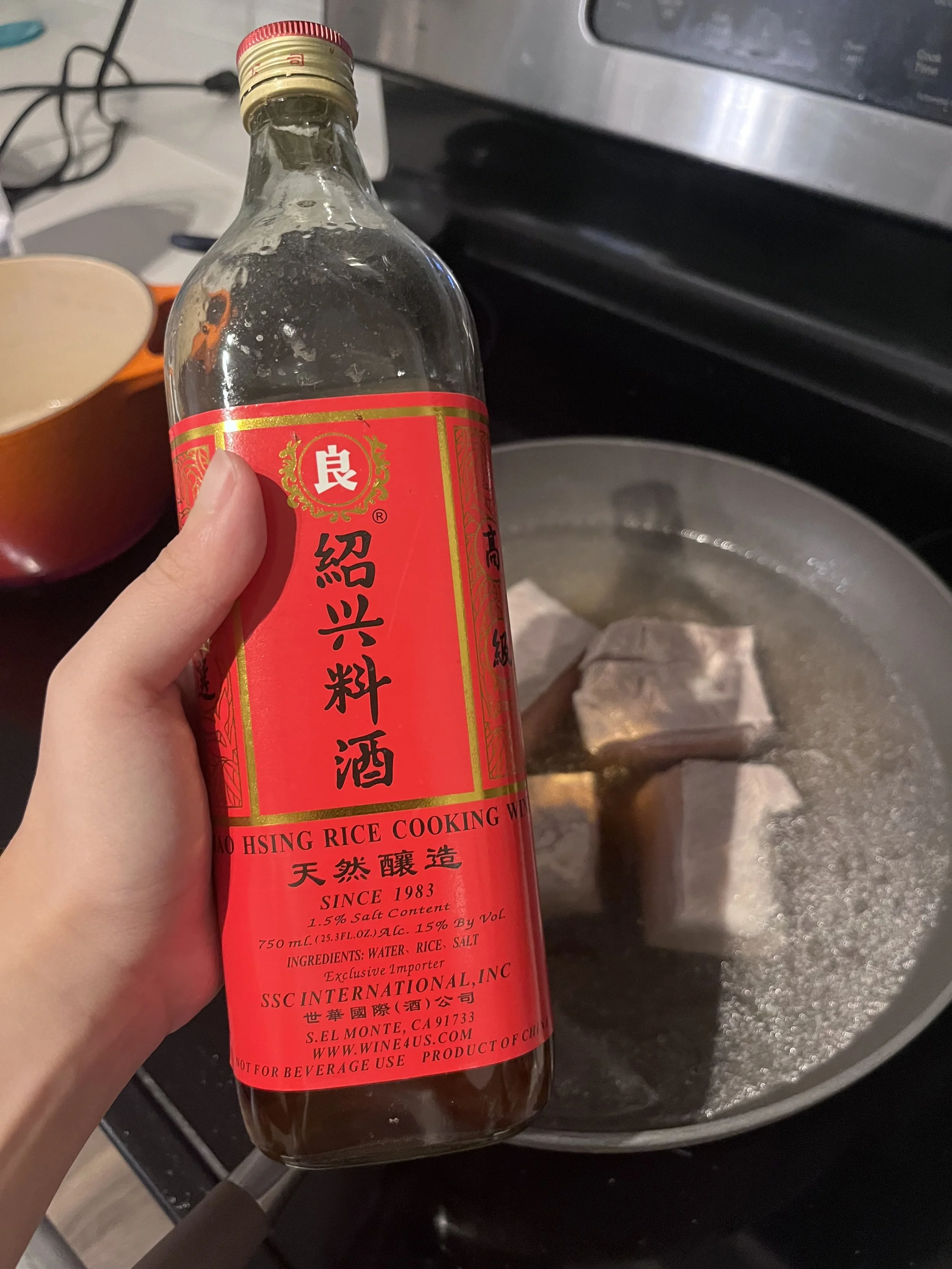
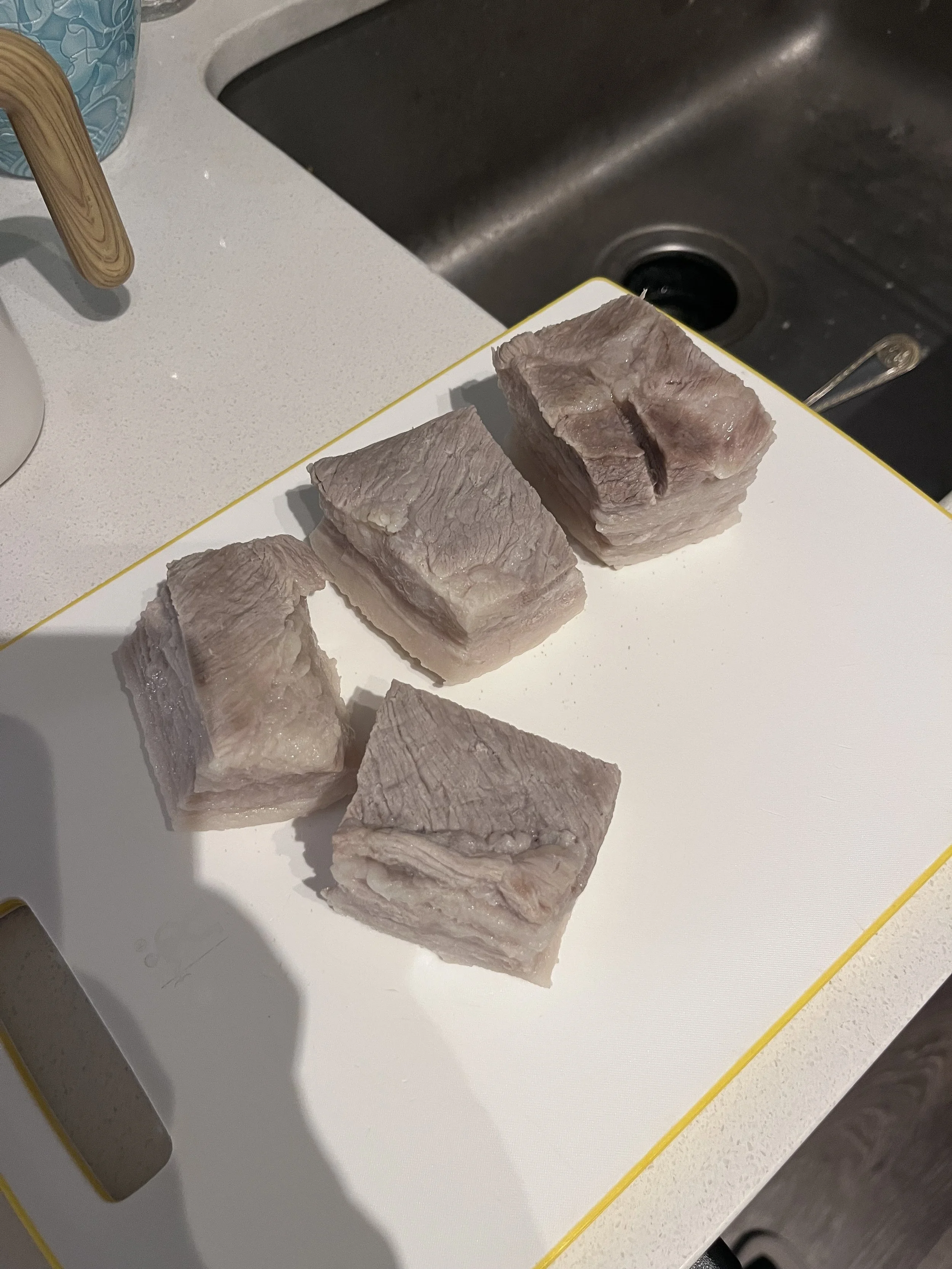
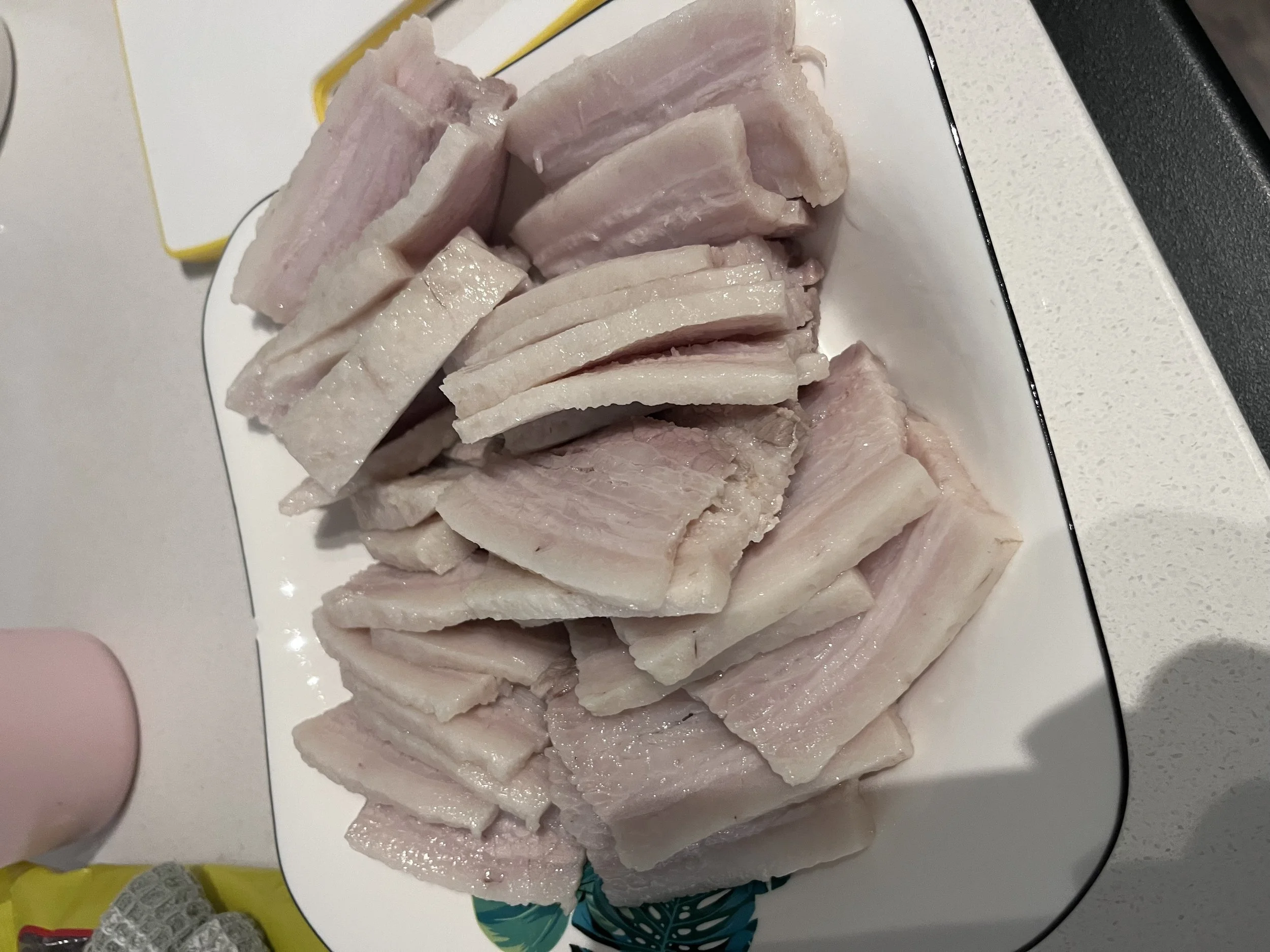
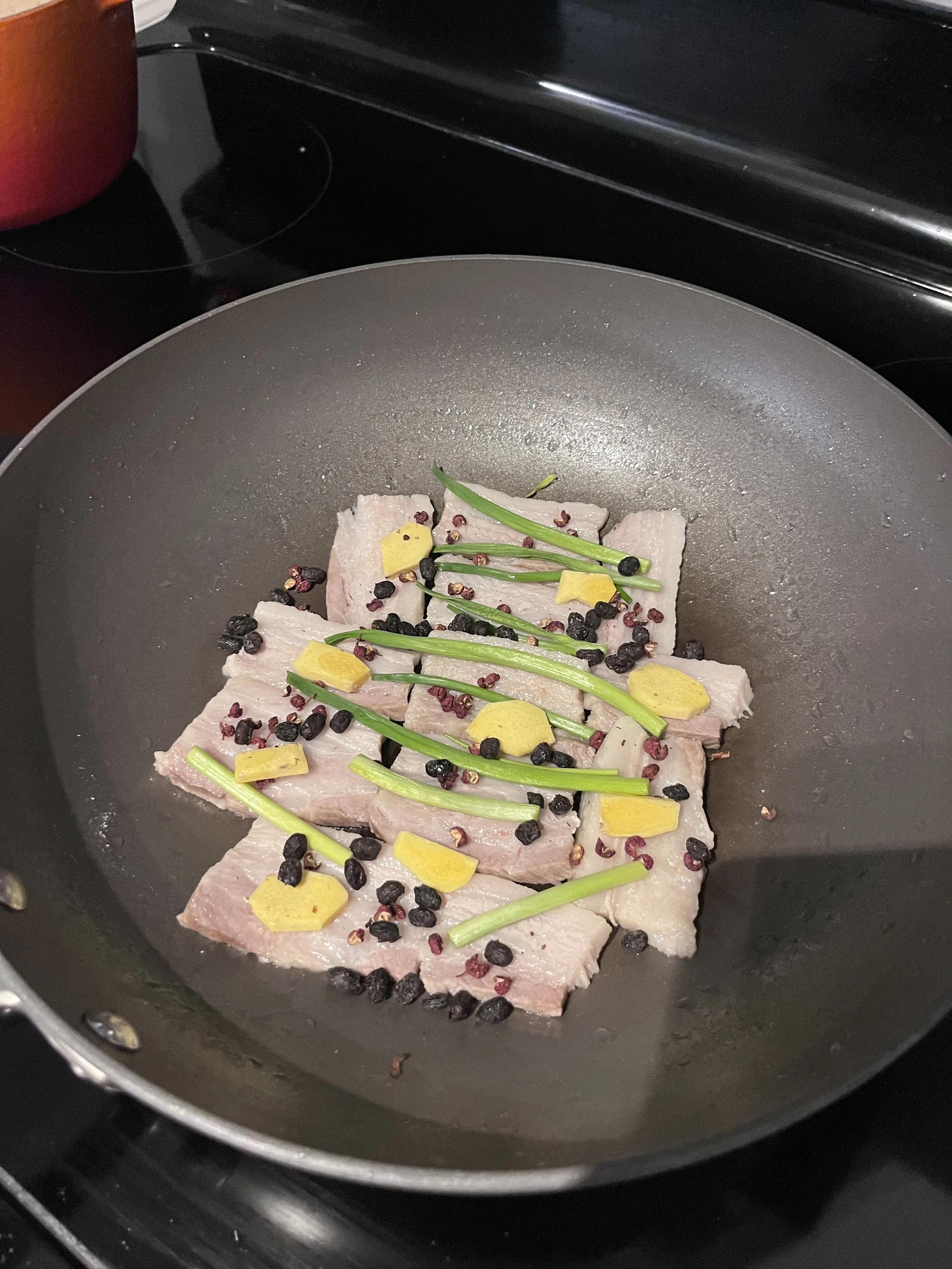
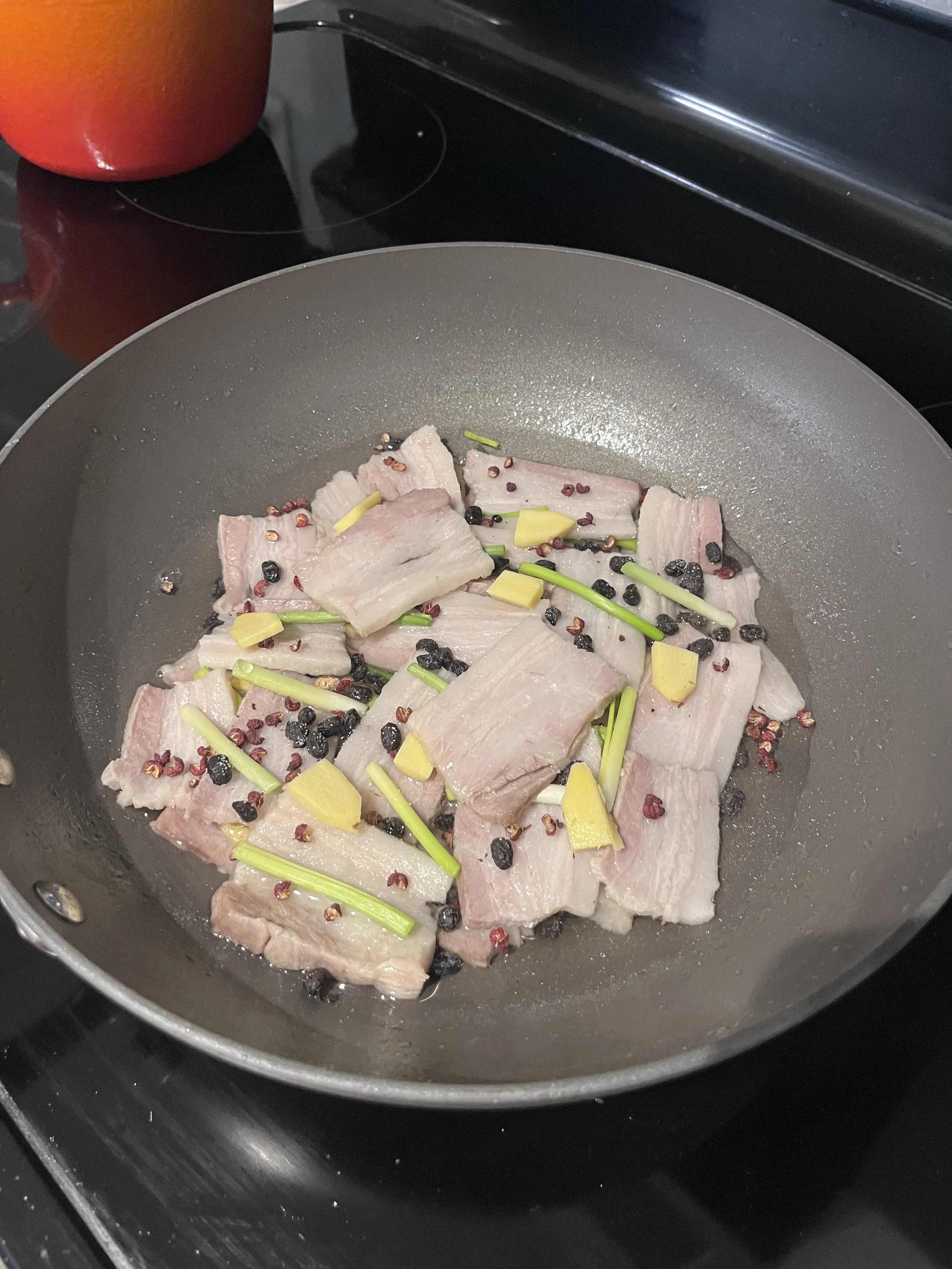
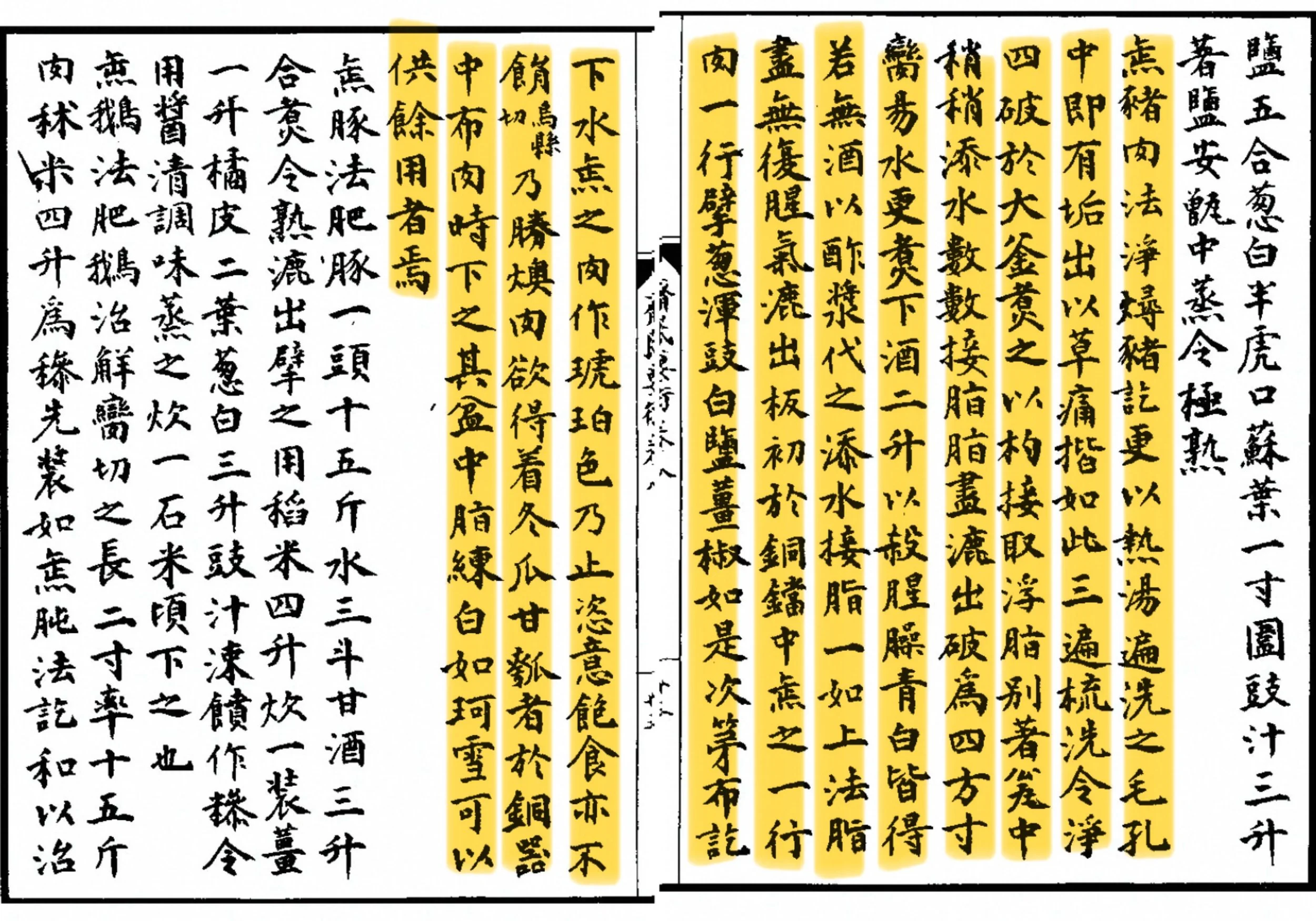
Recipe
缹猪肉法:净𬊈猪讫,更以热汤遍洗之,毛孔中即有垢出,以草痛揩。如此三遍,梳洗令净。四破于大釜煮之。以杓接取浮脂,别著瓮中,稍稍添水,数数接脂。脂尽漉出,破为四方寸脔,易水更煮。下酒二升以杀腥臊,青白皆得。若无酒,以酢浆代之。添水接脂,一如上法。脂尽无复腥气,漉出。板初于铜铛中缹之。一行肉,一行擘葱、浑豉、白盐、姜、椒。如是次第布讫,下水缹之,肉作琥珀色乃止。恣意饱食,亦不䬼,乃胜燠肉。欲得着冬瓜、甘瓠者,于铜器中布肉时下之。其盆中脂,练白如珂雪,可以供余用者焉。
Translation:
Method for Cooking Pork
After thoroughly scraping and cleaning the pig, wash it all over again with hot water. Dirt will emerge from the pores of the skin; scrub it vigorously with grass. Repeat this process three times, combing and washing until the pig is completely clean. Cut the pig into four quarters and boil them in a large cauldron. Use a ladle to skim off the fat that rises to the surface and collect it in a separate jar. Gradually add more water, repeatedly skimming off the fat as it accumulates. Once all the fat has been removed, take out the meat and cut it into four square pieces. Replace the water and boil the meat again. Add two sheng of wine to eliminate the unpleasant odor; either green or white wine will do. If wine is unavailable, substitute vinegar water. Continue adding water and skimming off the fat as described above. Once the fat has been completely removed and the unpleasant smell has disappeared, take out the meat and drain it. Next, cook the meat in a copper cooking vessel. Arrange it in alternating layers: one layer of meat, followed by one layer of torn scallions, whole fermented soybeans, white salt, ginger, and pepper. Continue arranging the ingredients in this order. Once everything has been layered, add water and simmer until the meat takes on an amber color. Eat as much as you please until fully satisfied. The meat will not become cloying, and is even better than roasted meat. If you wish to obtain winter melon or sweet gourd, add them when arranging the meat in the copper cooking vessel. The fat collected in the basin, once refined, will become as white and pure as snow or fine jade. It can then be kept for other uses.
Reflections:
Adjustments: The recipe instructs to cut the pork into four pieces twice. I ended up first boiling it as a whole and then boil again in pieces. I wasn’t sure how much was two sheng, so I ended up eyeballing it (also, I used cooking wine instead of the ones decided in the recipe, assuming that they are probably similar or may serve similar purposes). Also, I didn’t add winter melon or sweet gourd, given that they are optional.
On fat removal: During the process of boiling the meat, there was a think layer of fat floating in water, though very difficult to collect. I think I ended up with collecting more water than fat. When I was doing the last steps, simmering sliced pork with all the other ingredients in a little bit of water, there seemed to be more fat coming out from the meat than when it was being boiled. The end result is indeed somewhat less fatty due to this, but the fat collection in the original recipe wasn’t very ideal (at least not in my experience).
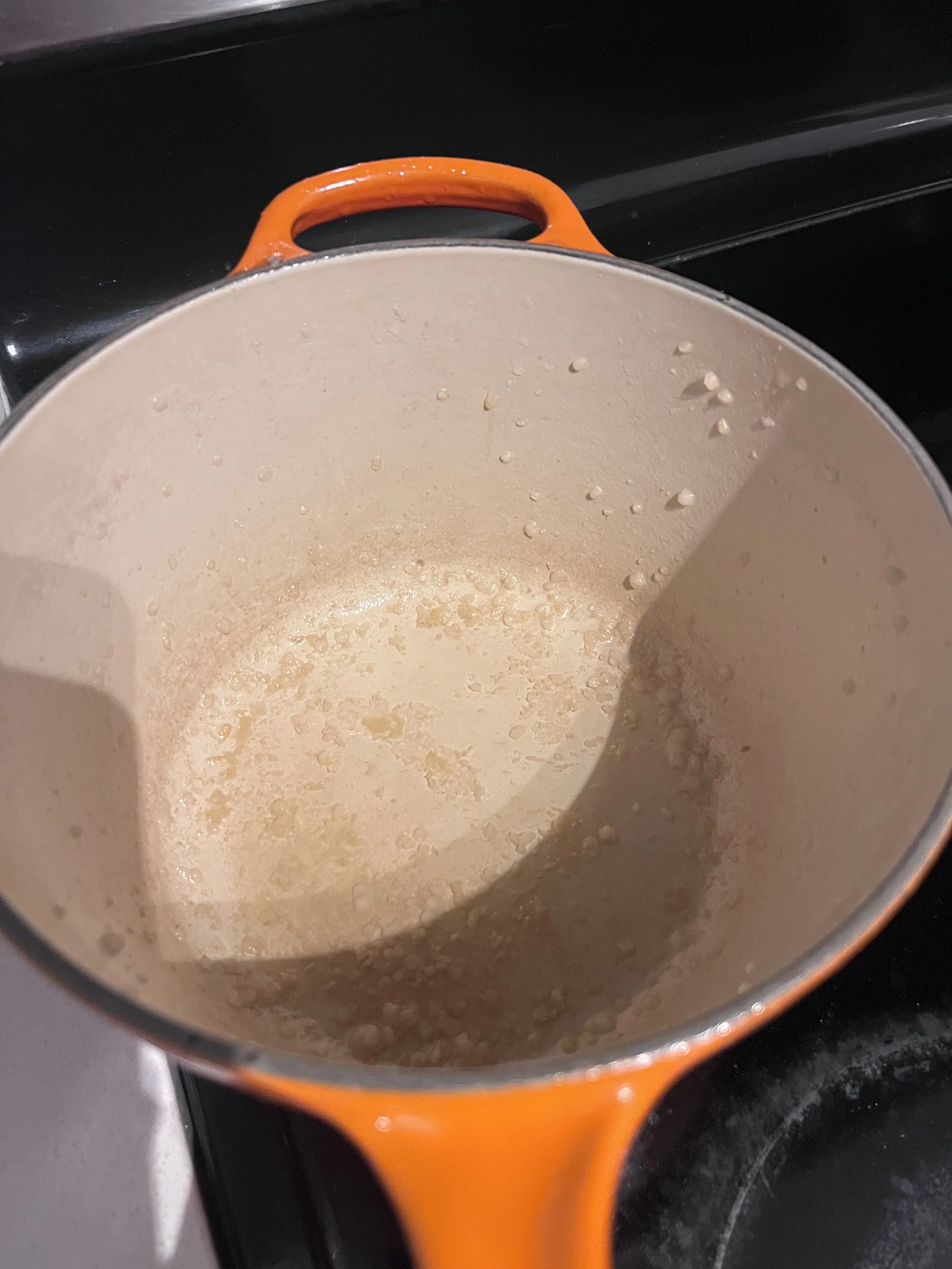
The fat collected did not become white and pure. I tried to heat it to remove the water, but it ended up splashing everywhere.
This culinary technique of 缹蒸 recorded in Qimin Yaoshu demonstrate a considerable degree of sophistication in meat preparation, as many steps are dedicated to controlling fat content, removing unpleasant odors, and developing flavor, including repeatedly boiling pork while skimming off the rendered fat, using wine or vinegar-based liquid to eliminate its unpleasant odor, and subsequently simmering the meat with various ingredients. It is also interesting to note here that the explanation of wine usage only occurs once in Qimin Yaoshu, which is in this recipe for pork.
However, despite the sophistication of the pork-processing techniques recorded in these recipes, Jia Sixie devotes relatively little attention to pig-farming compared with other domestic animals, particularly horses and sheep. There are significantly less content on pig and pork compared to the other domestic animals in Qimin Yaoshu, and there are also less pork recipes compared to the number in other or later cookbooks like Yuan Mei’s Garden of Contentment, which was written in the Qing dynasty, more than 1200 years after Jia Sixie. The limited emphasis on pig farming may reflect the growing preference for mutton among northern populations under the influence of non-Han dietary traditions.