Introduction
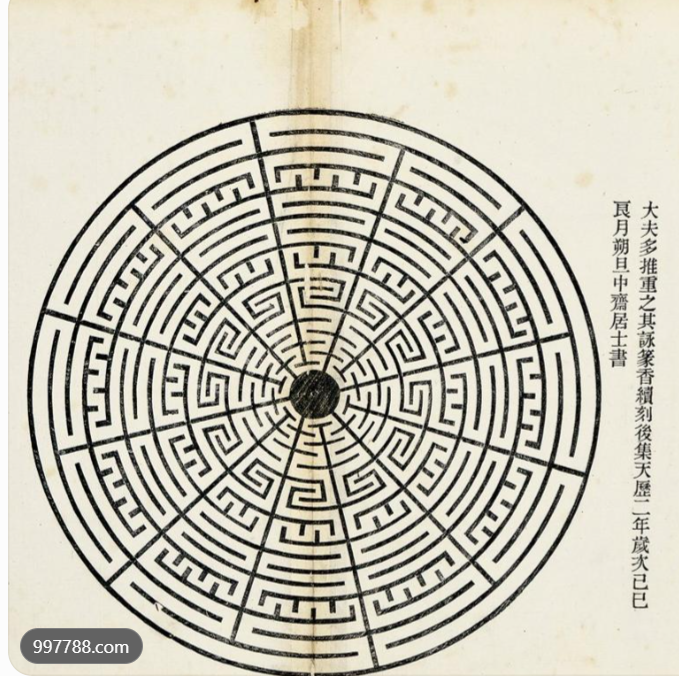
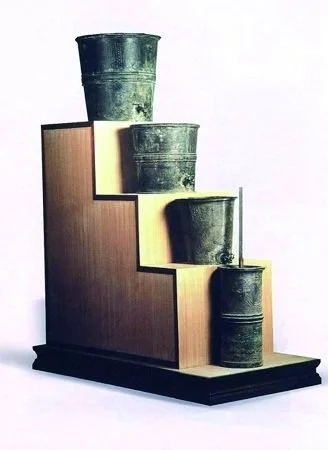
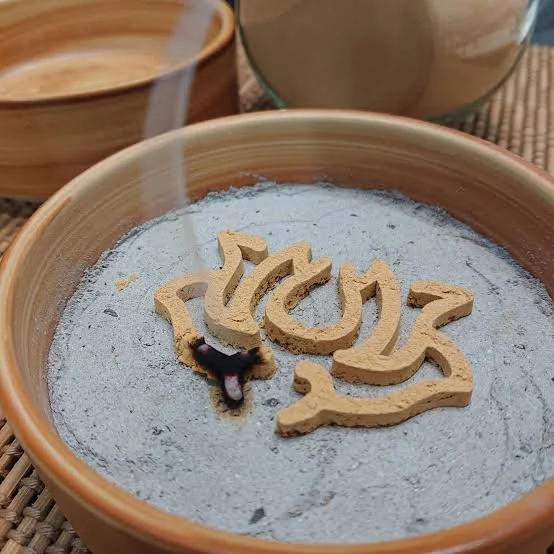
Before the widespread adoption of mechanical clocks, people in imperial China developed various methods of measuring time, including water clocks, sundials, and incense-burning devices. Among these technologies was the hundred-ke incense clock (百刻香印), which measured the passage of time through the gradual burning of powdered incense arranged in an intricate pattern. By dividing the burning path into one hundred units, known as ke (刻), the device transformed the physical process of combustion into a means of timekeeping.
One of the earliest surviving descriptions of this technology appears in Chen Shi Xiangpu (陳氏香譜), a compilation of incense-related knowledge associated with the late Song and early Yuan periods. Its second volume includes descriptions of the hundred-ke incense mold, its geometric measurements, and a specialized incense recipe.
The historical account traces the development of the device to 1073, during the Northern Song dynasty (960–1127). According to the text, a severe drought caused wells and springs to dry up, creating difficulties for water-based timekeeping. The incense clock offered an alternative that did not depend on a continuous water supply. An inscription dated 1074, written by the official Shen Li (沈立), credits Wu Zhengzhong (吳正仲) of Guangde with developing the engraved pattern and incense preparation method.
The hundred-ke incense clock was therefore more than a decorative object or a means of producing fragrance. It represented an effort to transform natural materials into a functional timekeeping technology. Its construction required knowledge of geometry, the combustion properties of plants, and the preparation of consistent incense powders. Reconstructing this device provides an opportunity to investigate how practical craftsmanship and material knowledge contributed to technological innovation in imperial China.
Chen Shi Xiangpu
The primary source for this reconstruction is Chen Shi Xiangpu (陳氏香譜, The Chen Family's Incense Manual), a four-volume compilation traditionally attributed to Chen Jing (陳敬), courtesy name Zizhong (子中), from Henan. Although Chen Jing is conventionally classified as a Song-dynasty author, little is known about his personal life or official career.
The compilation was not completed entirely by Chen Jing himself. According to its preface, written by the scholar Xiong Penglai (熊朋來) in 1322, the work took two generations to complete. Chen Jing's son, Chen Haoqing (陳浩卿), brought together his father's collected materials and arranged for the work's publication during the Yuan dynasty (1271–1368).
Rather than presenting only the author's personal inventions, Chen Shi Xiangpu compiled material from eleven earlier incense treatises, including works associated with Shen Li and Hong Chu (洪芻). The text documents a broad range of incense-related practices, including the classification of aromatic materials, methods of preparation, incense molds, storage techniques, and the cultural uses of fragrance. Its emphasis on both practical recipes and literary traditions suggests that it was particularly relevant to educated readers interested in incense culture, although its precise original readership remains uncertain.
The compilation reflects the flourishing incense culture of the Song dynasty, when fragrance played a role in religious practices, domestic life, personal adornment, and scholarly activities. Beyond preserving recipes, the text transformed specialized knowledge about incense-making into written instructions that could circulate beyond individual practitioners.
For this reconstruction, two sections of Volume Two are especially important: Baike Xiangyin (百刻香印, Hundred-Ke Incense Mold) and Baike Zhuantu (百刻篆圖, Hundred-Ke Incense Diagram). The former describes the construction and dimensions of the incense mold, while the latter explains the preparation of incense using two ingredients, yesu (野蘇) and songqiu (松毬), mixed in a weight ratio of 10:8. The instructions specify when the plants should be collected, how they should be dried, and how the materials should be ground into powder.
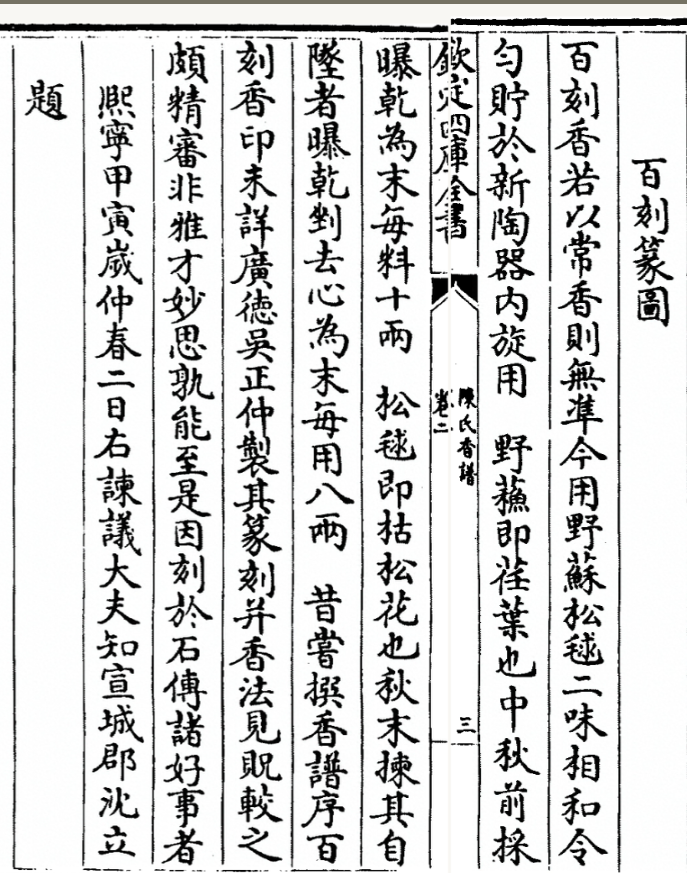
Text:
百刻篆圖
百刻香若以常香則無準,今用野蘇、松毬二味,相和令勻,貯於新陶器內,旋用。
野蘇即荏葉也,中秋前採,曝乾為末,每料十兩。
松毬即枯松花也,秋末揀其自墜者,曝乾剉去心為末,每用八兩。
昔嘗撰香譜序,百刻香印未詳。廣德吳正仲製其篆刻并香法見貺,較之頗精審,非雅才妙思孰能至是。因刻於石,傳諸好事者。
熙寧甲寅歲仲春二日,右諫議大夫知宣城郡沈立題。
Translation:
The Hundred-Ke Incense Seal Diagram
When making hundred-ke incense, using ordinary incense will not produce accurate or consistent results. Therefore, two ingredients, yesu (野蘇) and songqiu (松毬), are used instead. Mix them thoroughly until evenly combined, store the mixture in a new earthenware container, and take it out as needed.
Yesu refers to the leaves of ren (荏). The leaves should be harvested before the Mid-Autumn Festival, dried in the sun, and ground into powder. Each batch requires ten liang (兩).
Songqiu refers to what the text calls dried pine flowers. At the end of autumn, collect those that have fallen naturally from the tree. Dry them in the sun, chop them into smaller pieces, remove their central cores, and grind them into powder. Each batch requires eight liang.
Reconstruction
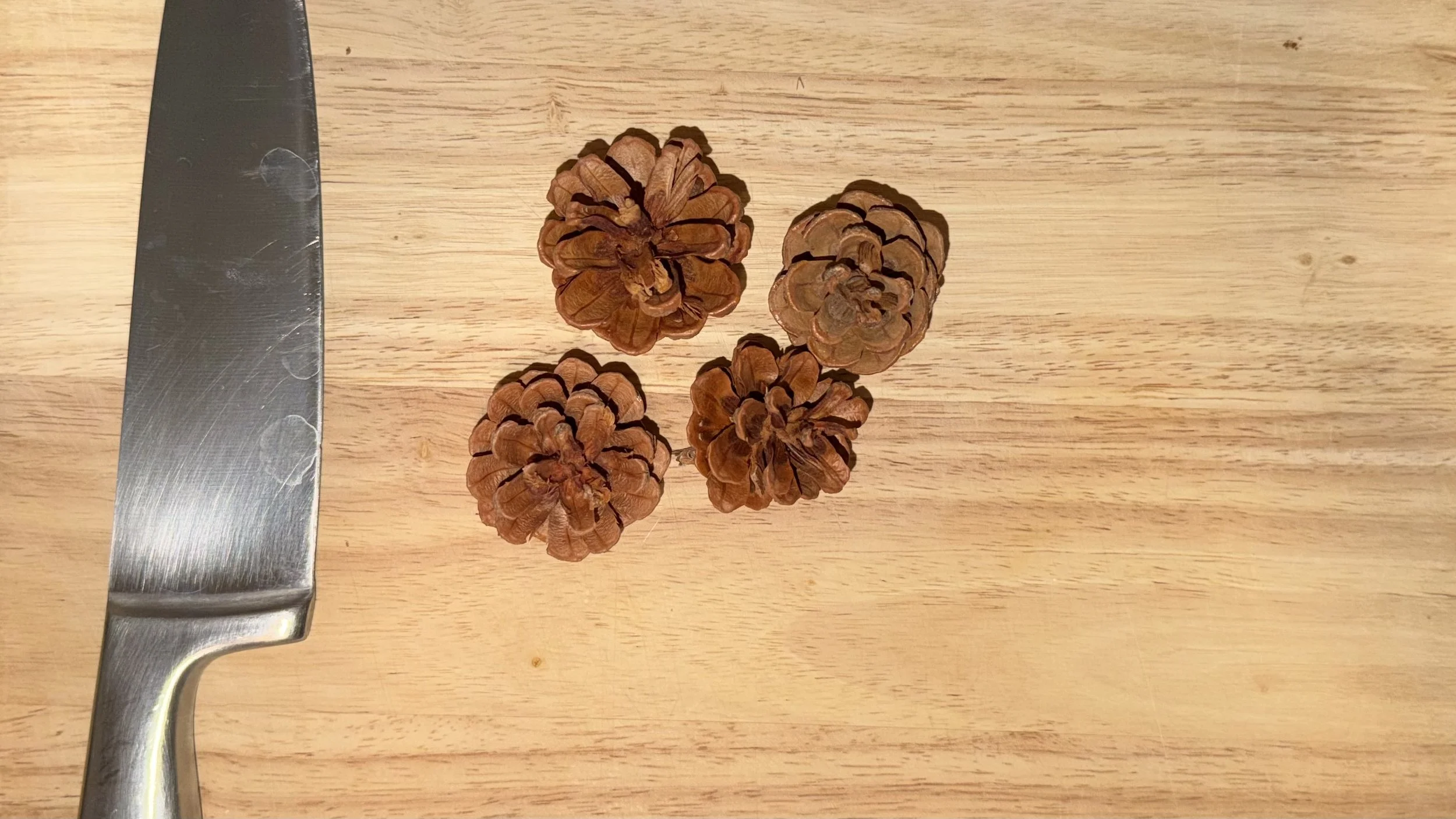
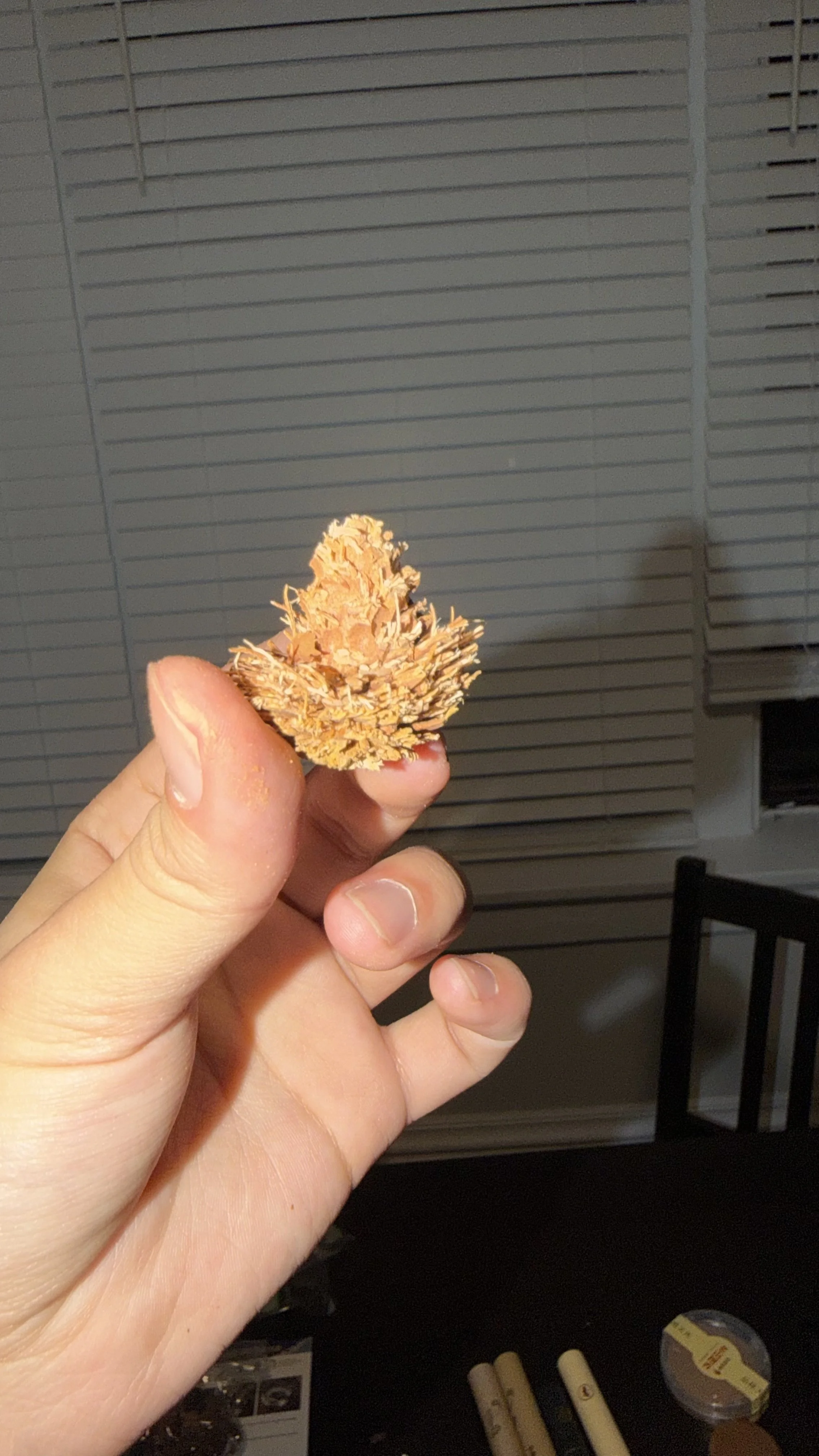
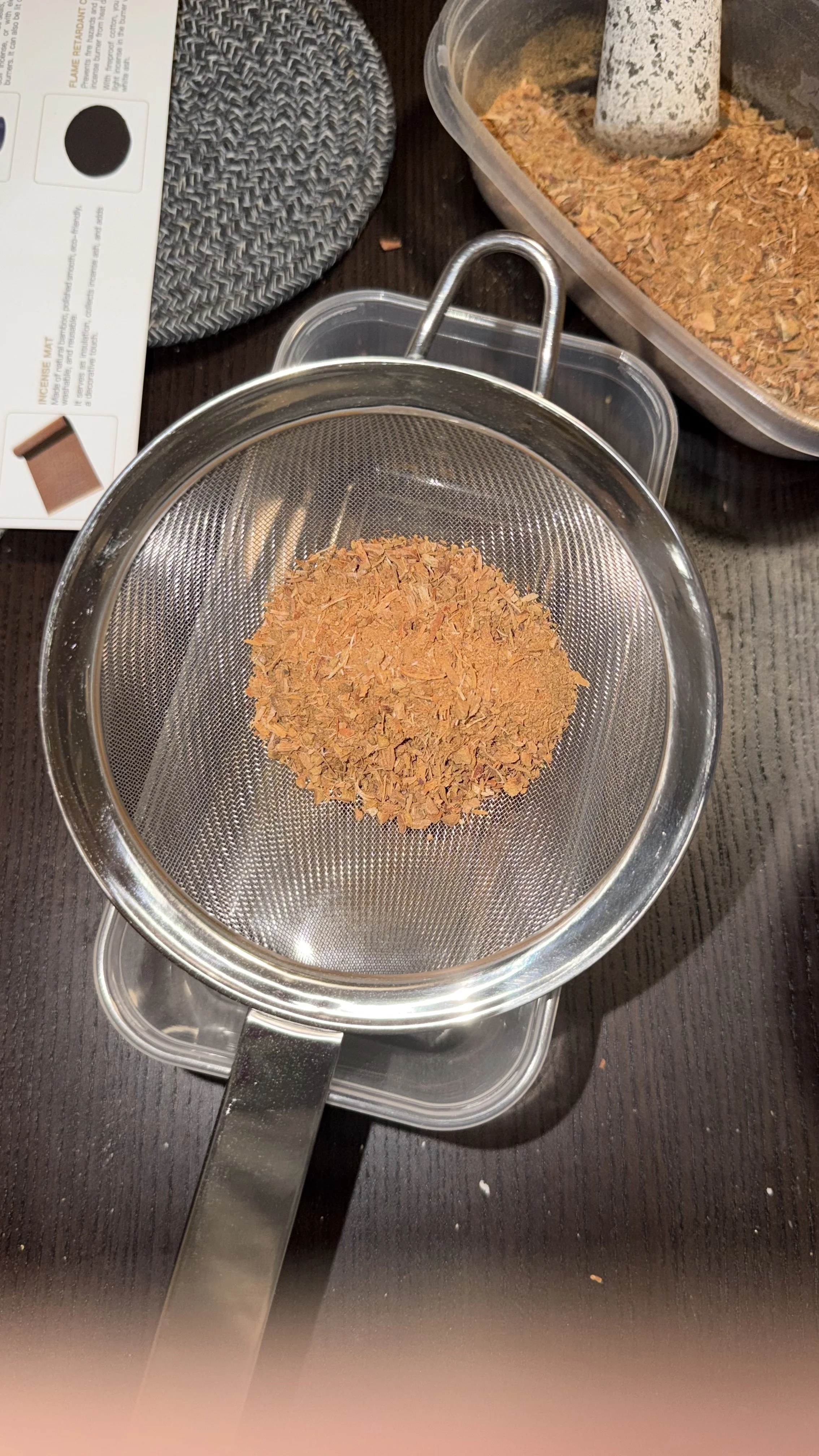
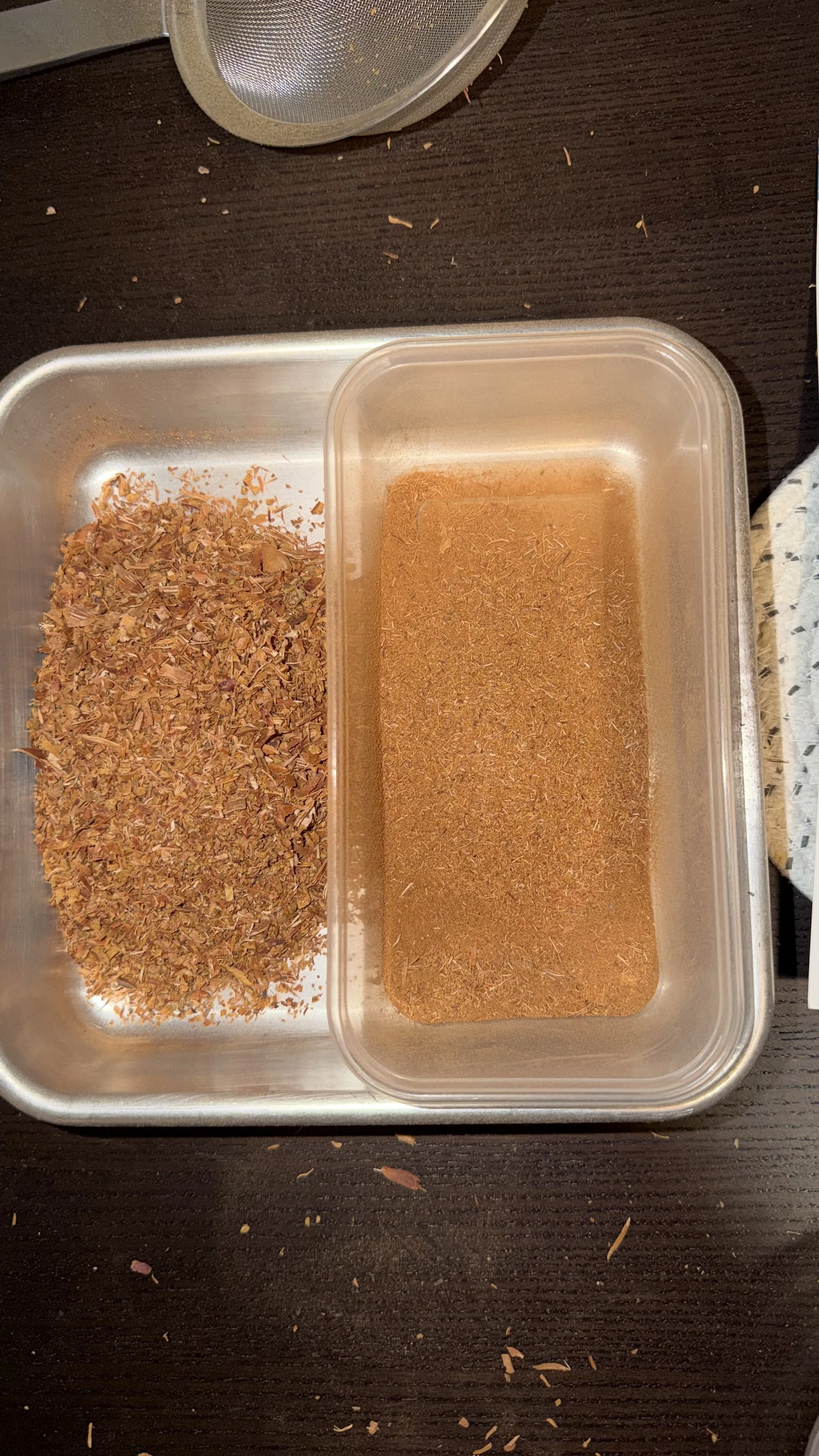
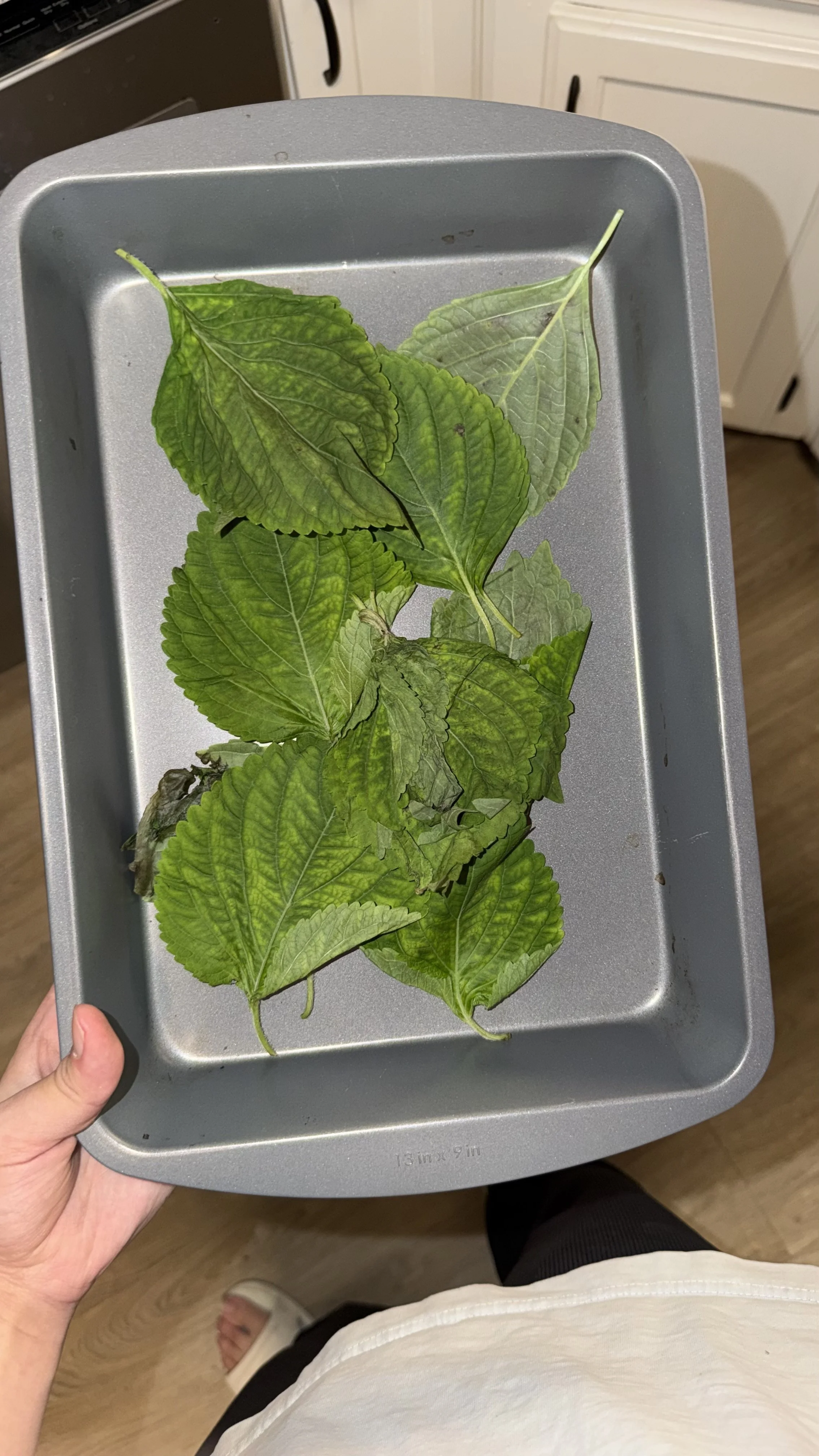
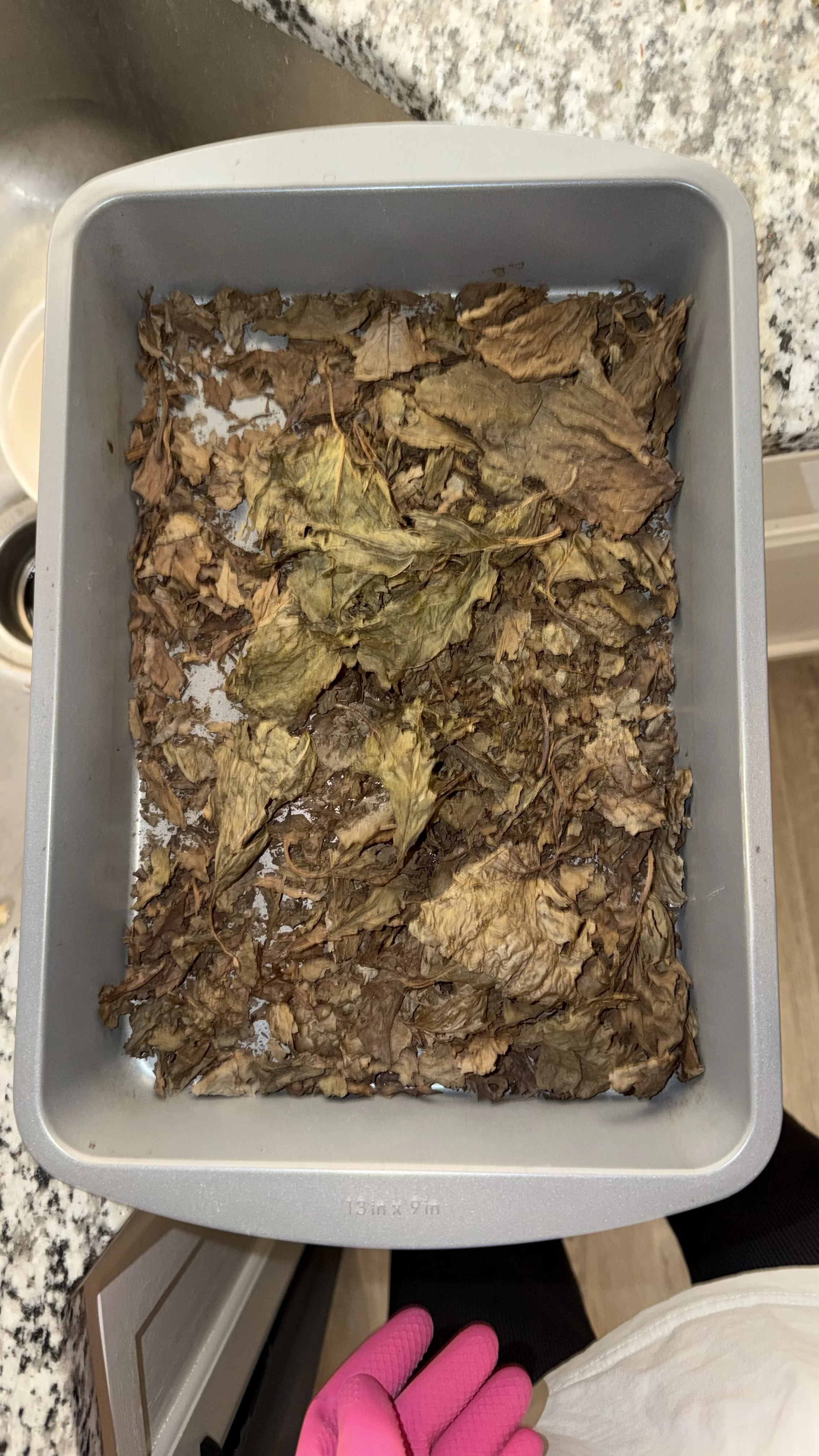
Dried pine cones and perilla leaves were collected for the reconstruction of the historical incense recipe.
The outer woody scales were removed from the central core of each pine cone.
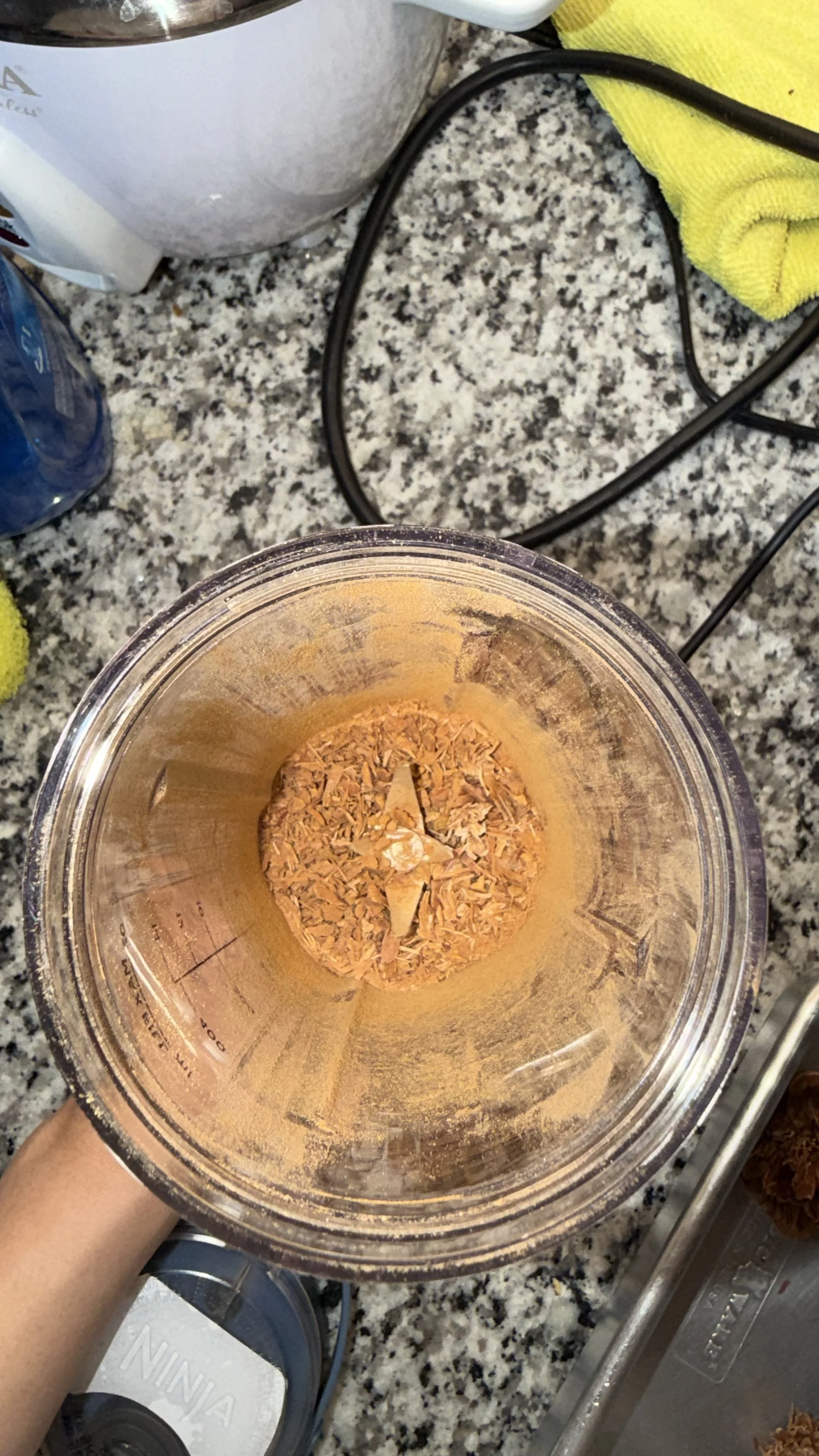
Pine cone fragments were ground with a modern electric blender.
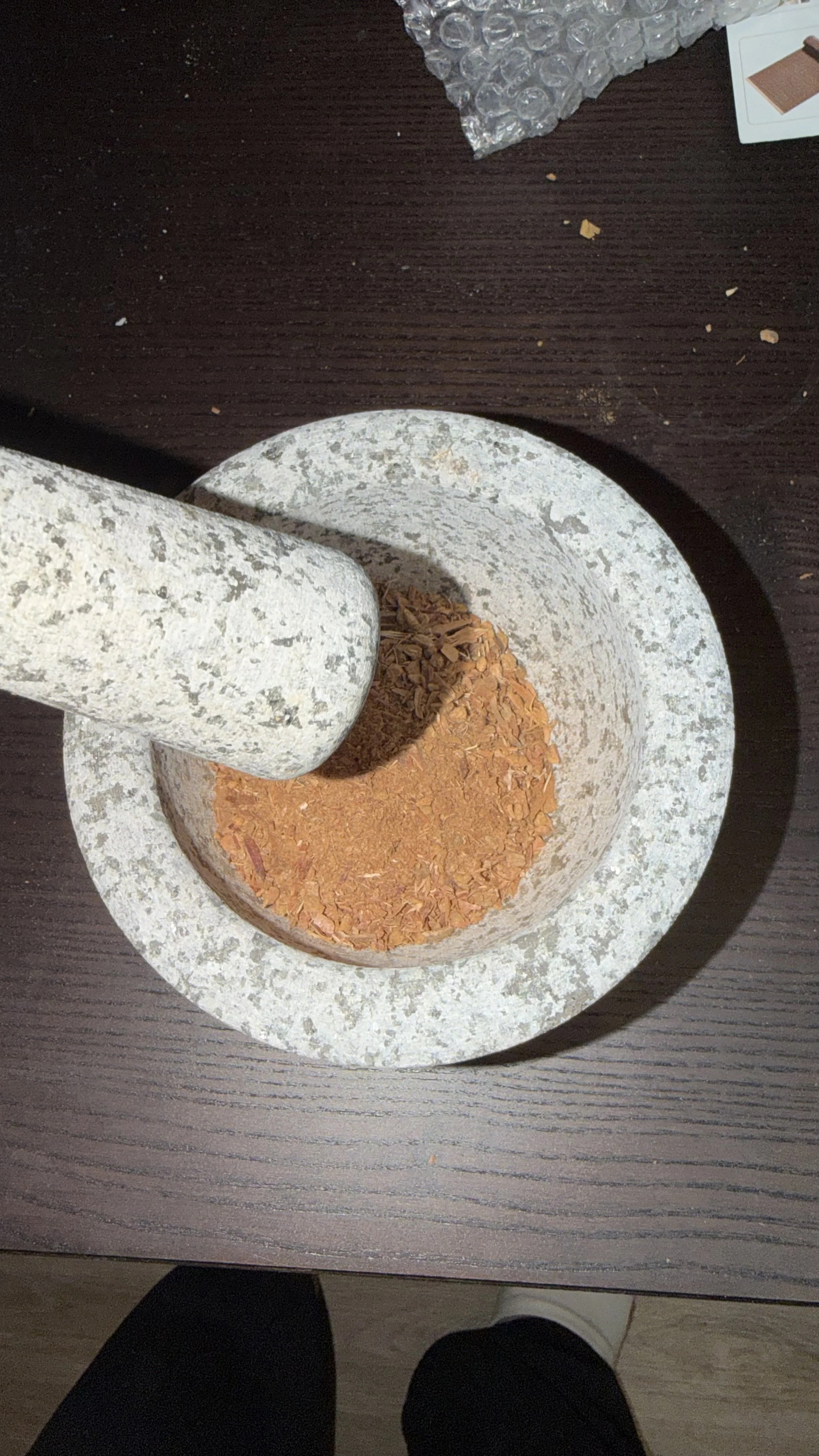
Pine cone fragments were further ground into smaller particles using a mortar and pestle
Sieving processed pine cone material to separate larger woody fragments from finer particles.
Fresh perilla leaves were dried using oven at 400F for 30 min.
The same grinding proccess was applied to the perilla leaves
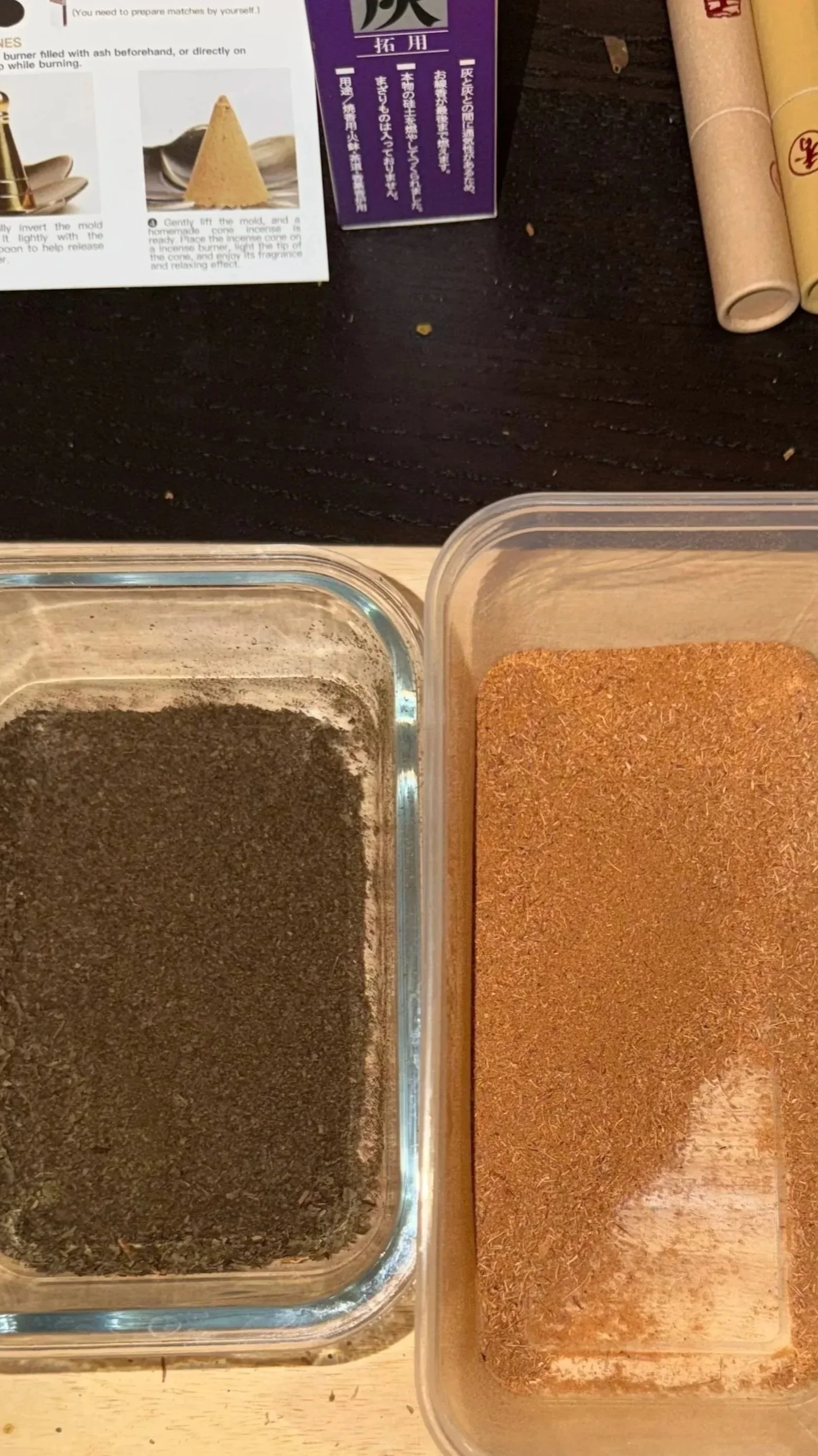
Final product: prepared perilla powder (left) and pine cone powder (right).
Before beginning the reconstruction, I first investigated the botanical identities of the two ingredients recorded in Chen Shi Xiangpu: yesu (野蘇) and songqiu (松毬). In Volume Two, the text explicitly identifies yesu as the leaves of ren (荏葉), which were to be harvested before the Mid-Autumn Festival, sun-dried, and ground into powder.¹ To identify this plant more precisely, I consulted Li Shizhen's Bencao Gangmu (本草綱目), a sixteenth-century Chinese materia medica. The text associates ren with baisu (白蘇, white perilla), while also preserving an earlier description of yesu as a plant resembling ren but lacking purple coloration and strong fragrance.² Modern botanical research identifies ren with Perilla frutescens var. frutescens, suggesting that this variety is a plausible candidate for the historical ingredient, although the exact identification remains uncertain.³
The second ingredient, songqiu, is described in Chen Shi Xiangpu as ku songhua (枯松花), which should be collected after naturally falling in late autumn, sun-dried, chopped, and stripped of its central core before grinding.¹ These instructions suggest that songqiu most likely refers to mature woody female pine cones rather than pine pollen, since pine cones possess a central axis surrounded by woody scales.⁴ However, the historical text does not identify a specific pine species. Consequently, the ingredients used in my reconstruction represent botanically plausible substitutes rather than definitively identified historical materials.
Current Takeaway
Although Chen Shi Xiangpu provides specific ingredients, proportions, and basic preparation methods, it leaves out many practical details.
How should the ingredients be ground into powder?
How fine should the powder be?
What tools should be used?
Should the powder be sieved to remove larger particles?
One unexpected observation was that the reconstructed incense powder did not smell particularly pleasant compared with modern commercial incense.
This suggests that the selection of ingredients may have prioritized consistent combustion over producing a pleasant fragrance.
One unexpected challenge during my reconstruction was how expensive and difficult it was to obtain the two ingredients, even though they seem to be relatively ordinary plant materials.
Pine cones, and perilla may have been obtainable simply by collecting them from the ground.
However, their accessibility would still have depended on local geography, season, and the availability of labor.
Future steps
I will examine whether the length of an incense seal's burning path is proportional to its total burning time. Incense seals with different path lengths will be constructed while keeping the ingredient composition and path width constant. Their length and burning durations will be recorded and a calibration curve will be established to determine whether a predictable relationship exists between path length and elapsed time.
If time permits, I will use the 3D printer at the Spartan Light Metal Products Makerspace to design and 3D print incense seal molds based on the historical illustrations in Xiangcheng (香乘). Several molds featuring different geometric patterns, including straight, curved, and more intricate paths inspired by historical incense seals, will be constructed. I will then record the differences in burning duration, combustion interruptions, and trial-to-trial variability to determine whether certain geometric patterns provide more accurate time measurement. This experiment will explore how the complexity of incense seal patterns may have influenced their practical function as timekeeping devices.