Yuan Mei's instructions for brewing tea initially seemed too short to recreate. In a short span of prose and direct instructions, he explains how to store tea leaves, when to boil the water, and how to serve it.[1] The direct nature of the writing interested me. Despite how exact the directions were, I still had to consider how much tea to use and what a changed flavor would look like. By testing Yuan's warning about the taste of covered brewed tea, I wanted to explore the value and limits of treating a historical recipe as an exact manual.
Yuan Mei was a Qing poet and former scholar-official in the eighteenth century, and was renowned for his writings on food and cuisine. One of his works, Suiyuan shidan, was published in 1792 and later translated into English.[2] The work focuses on various food recipes, interspersed with sporadic hours of personal, editorial judgment.[3] While it is not, of course, an objective record of everyday cuisine in Qing China for the common person, it does point to the individualized standards of a literati-adjacent figure who had the gall to characterize certain foods as badly prepared or almost vulgar.
He often criticized dining choices that pitted display against flavor and put the former above the latter. He warned of the dangers of "meals for the ears" and “meals for the eyes”, mocking people who focused on ingredient prices and excessive banquets instead of actual meal quality.[4] Specifically, he portrayed ingredients as important only for the final flavor.[5]
This might explain the strict diction of his brief brewing directions:
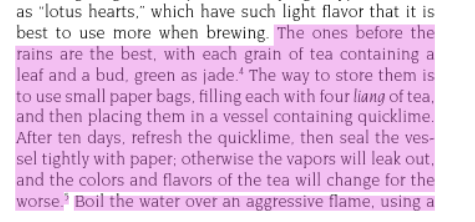
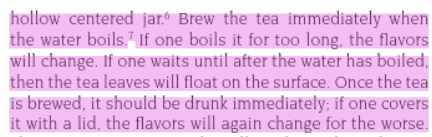
Yuan Mei’s instructions emphasize storage, boiling water, immediate drinking, and leaving the brewed tea uncovered.
Yuan's description also says to store portions of the loose-leaf buds in paper kept in a vessel of quicklime. The quicklime's purpose was to keep the buds fresh and dry. It also stated to brew fresh water as soon as the water boils.[6] The source has a very specific and succinct set of instructions, including specific steps and even qualitative measurements.
On the topic of good flavor, good tea did not necessarily mean one of strong flavor. Yuan writes that he had initially disliked Yiwu tea because it had a very concentrated bitterness. However, his views had changed once he was told to smell and slowly try the tea. As a result, his view of quality seemed to emphasize both intensity and blandness, given that the Longjing tea he tried was "clear."[7] Scholar Xu Guanmian generalizes this concept within the broader scope of literati preferences: he noted qingxian, a clear taste that maintained a meal's flavor without becoming too overbearing.[8]
Furthermore, Andrew Schonebaum emphasizes that the water's age and how it was stored were closely observed. Understanding such differences when used in a meal was oftentimes seen as a symbol of high social status.[9] This understanding was crucial to realizing that enjoyment and bitterness acted as somewhat independent qualities.
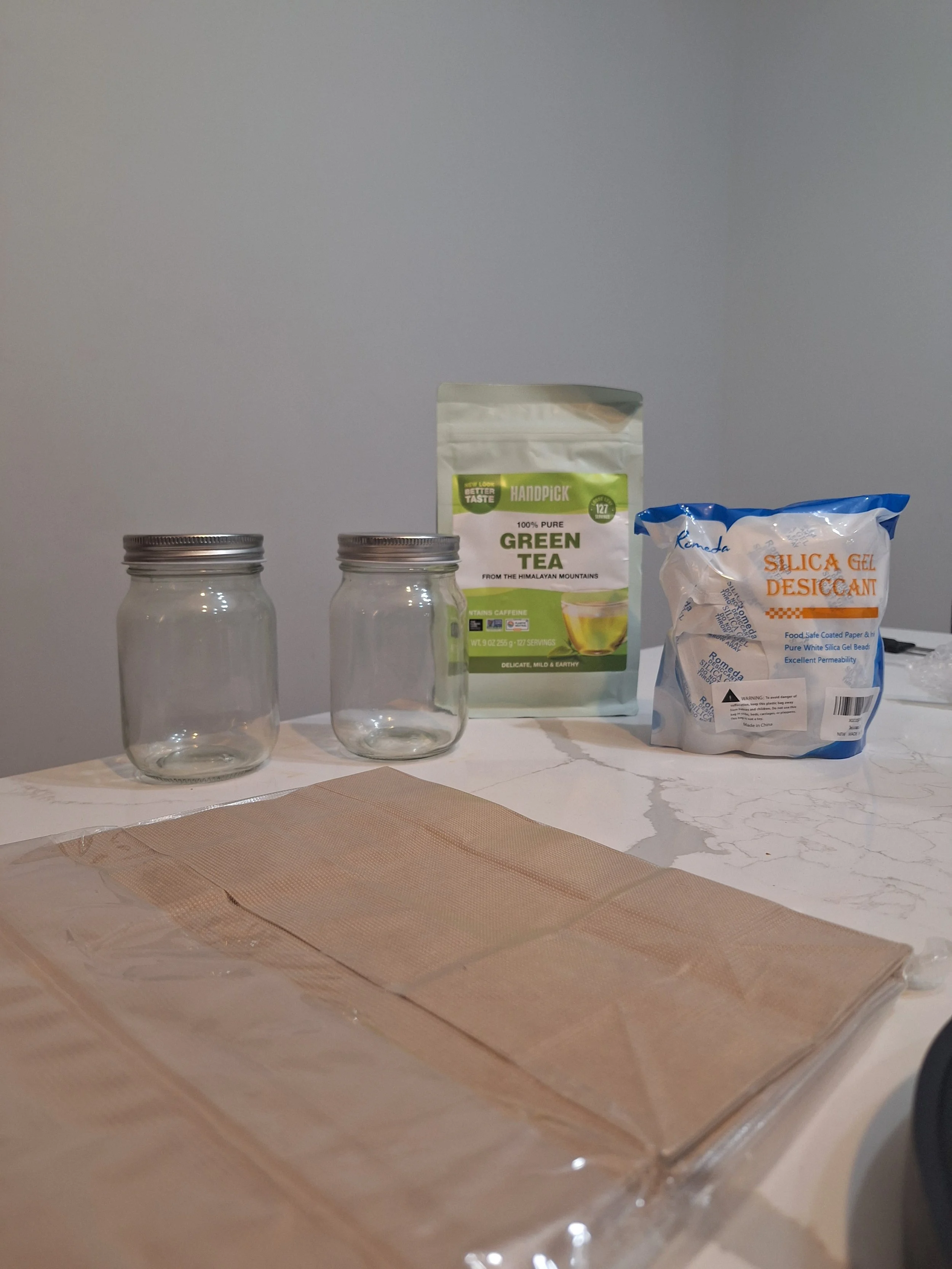
I used commercially available Handpick green tea rather than one of the specific historical varieties
Hypothesis
When reworking the project, I wanted to understand what judgments are needed to reconstruct the tea preparation, and how his standards of "good tea" compare with modern tasters' responses.
Based on his warnings, I initially believed the uncovered tea would be perceived as more enjoyable and described as more pleasant. I also believed that longer steeping would possibly make the tea stronger. While Yuan gave no specific steeping period, I used this to make this process more testable.[10]
Reconstructing the Storage Method
To start, I focused on tea storage. He recommended storing it in paper packets inside a quicklime container. For convenience and safety purposes, I used commercial green tea in a paper bag that was then put into an airtight screw jar for six days. I used another sample in the original packaging. The ten-day instruction seemed to apply only to replacing the quicklime.[11]
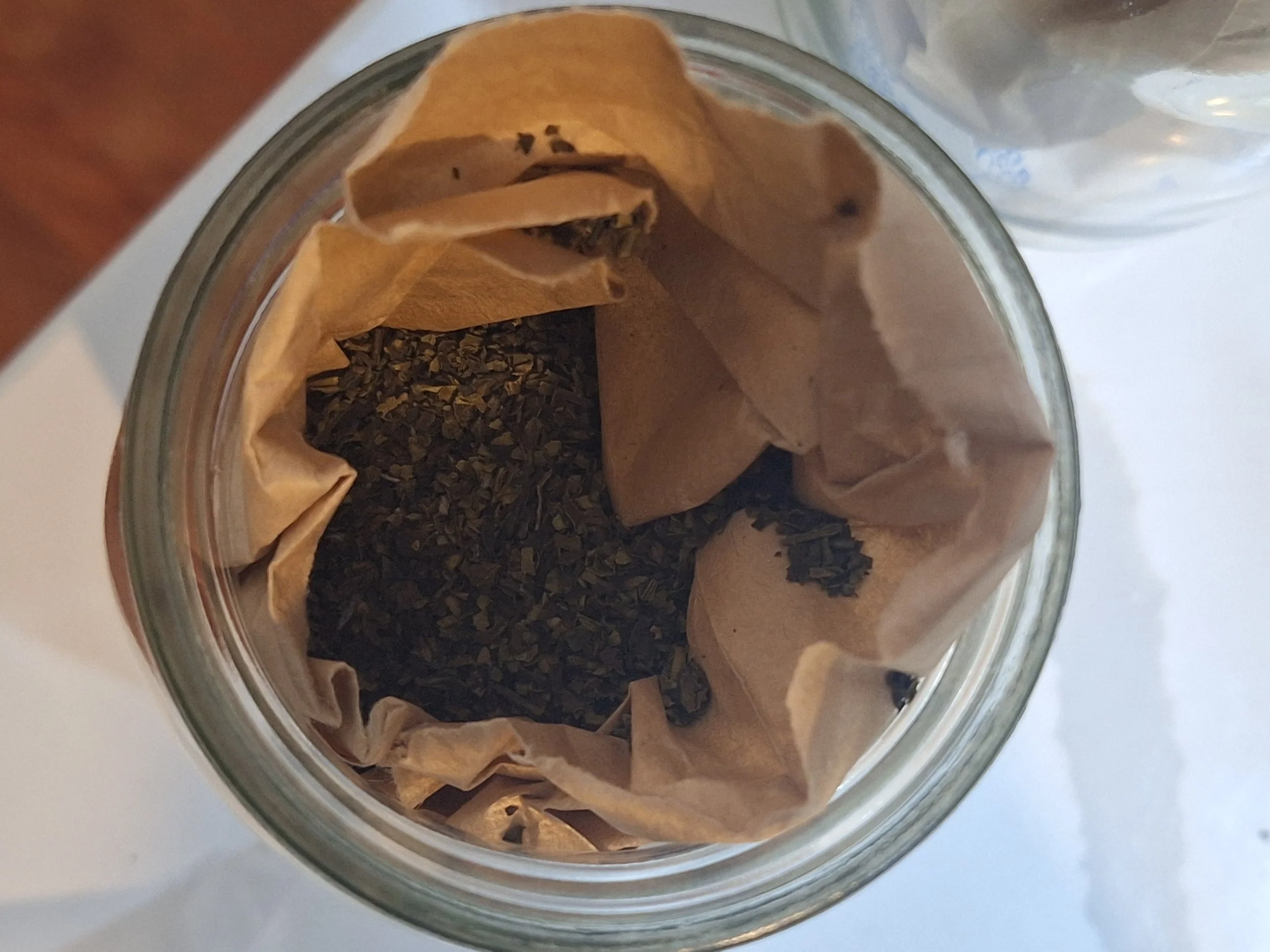
My adapted storage method reproduced Yuan’s paper packet and sealed outer container but omitted the quicklime.
Brewing the Tea
For each trial, I placed three spoonfuls of tea into a cooking pot, with four cups of fresh water boiled in a kettle. I used the kettle's clear design to tell when the water was boiling rather than measuring a specific temperature.
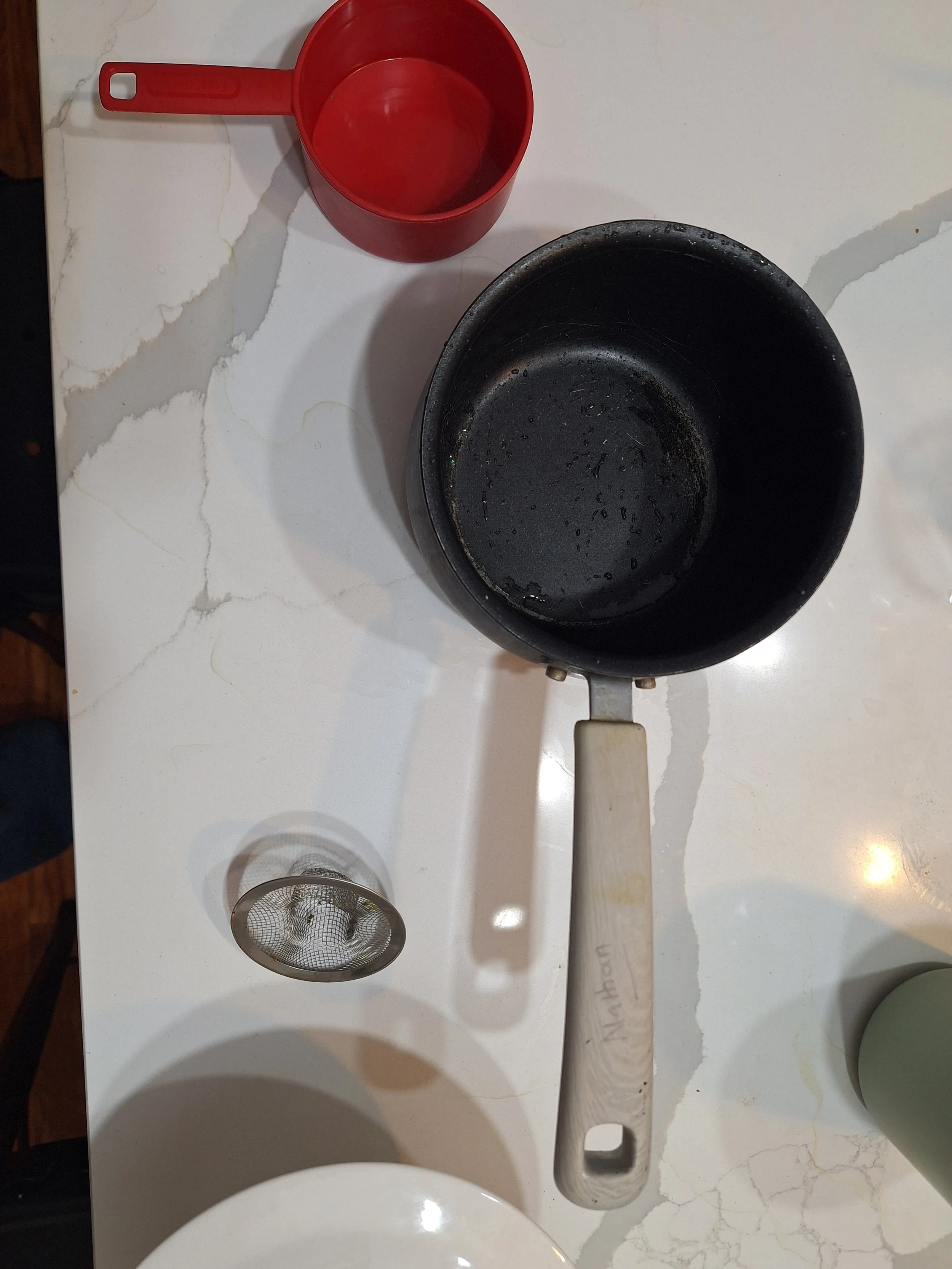
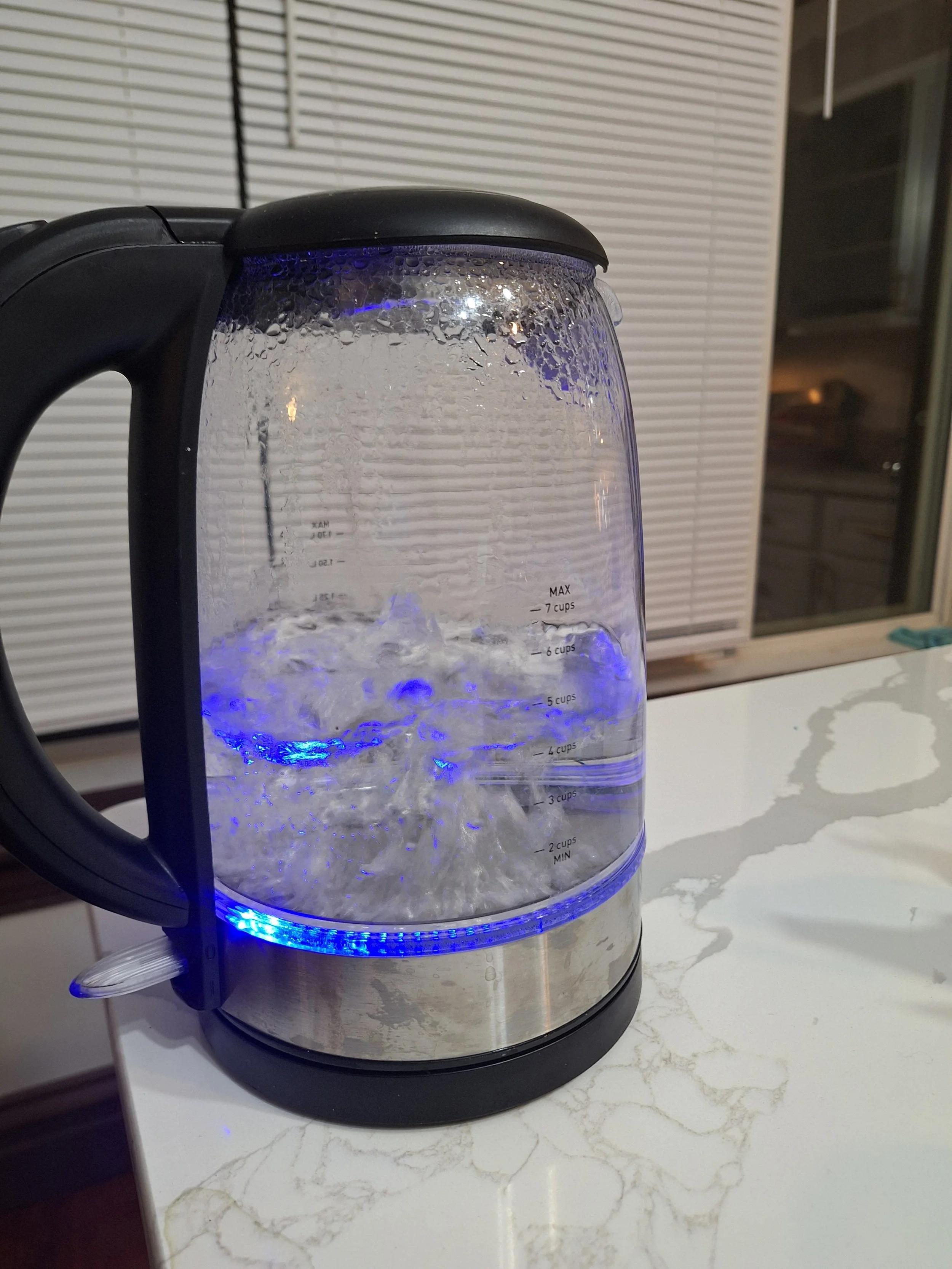
Then, I poured three cups over the leaves and started a timer. This reinforced Yuan's focus on a visible boiling point, despite the equipment being modern.[12] This is a similar sentiment for a "brewing container's" modern substitute being a heatproof cooking pot.
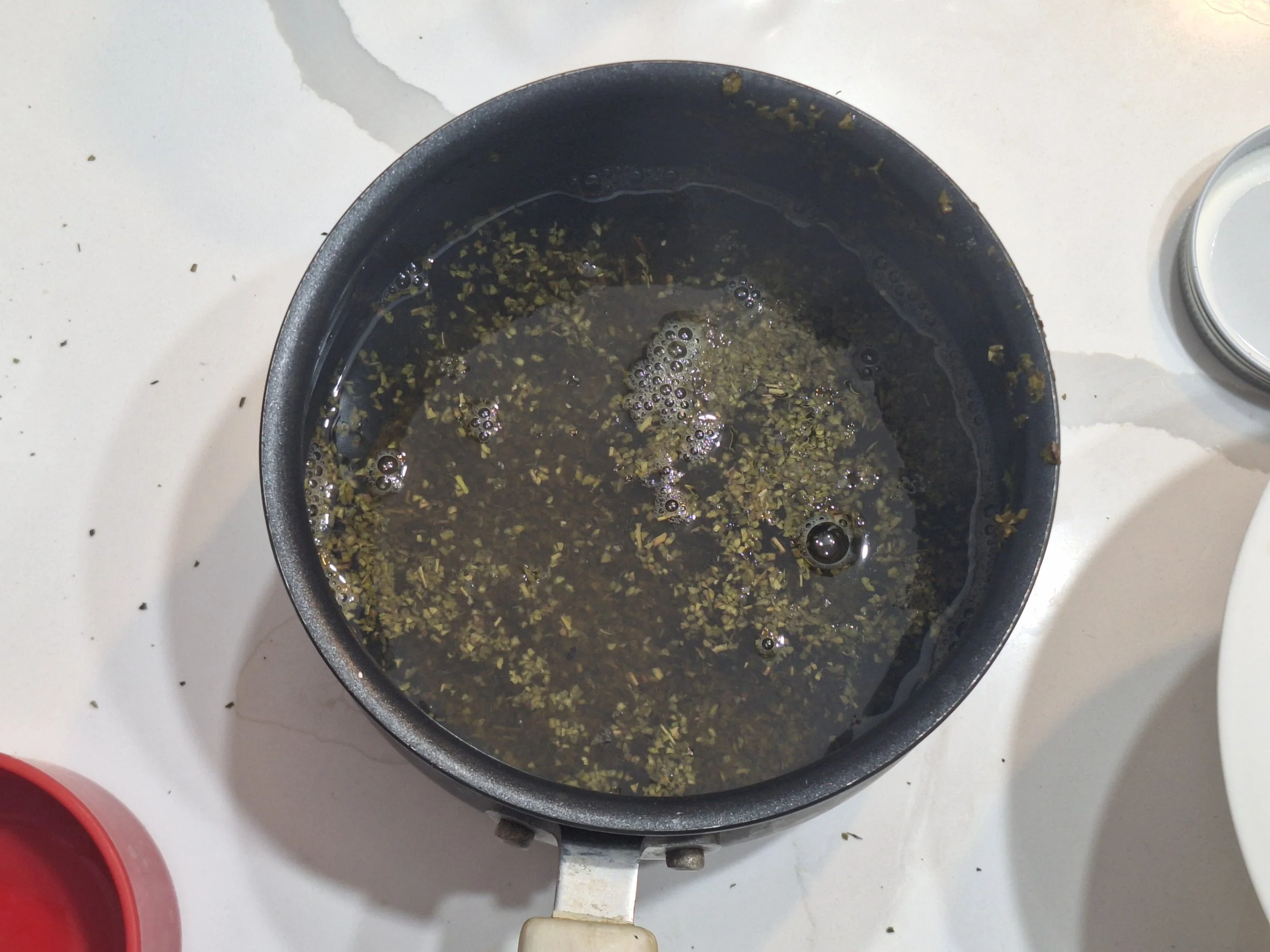
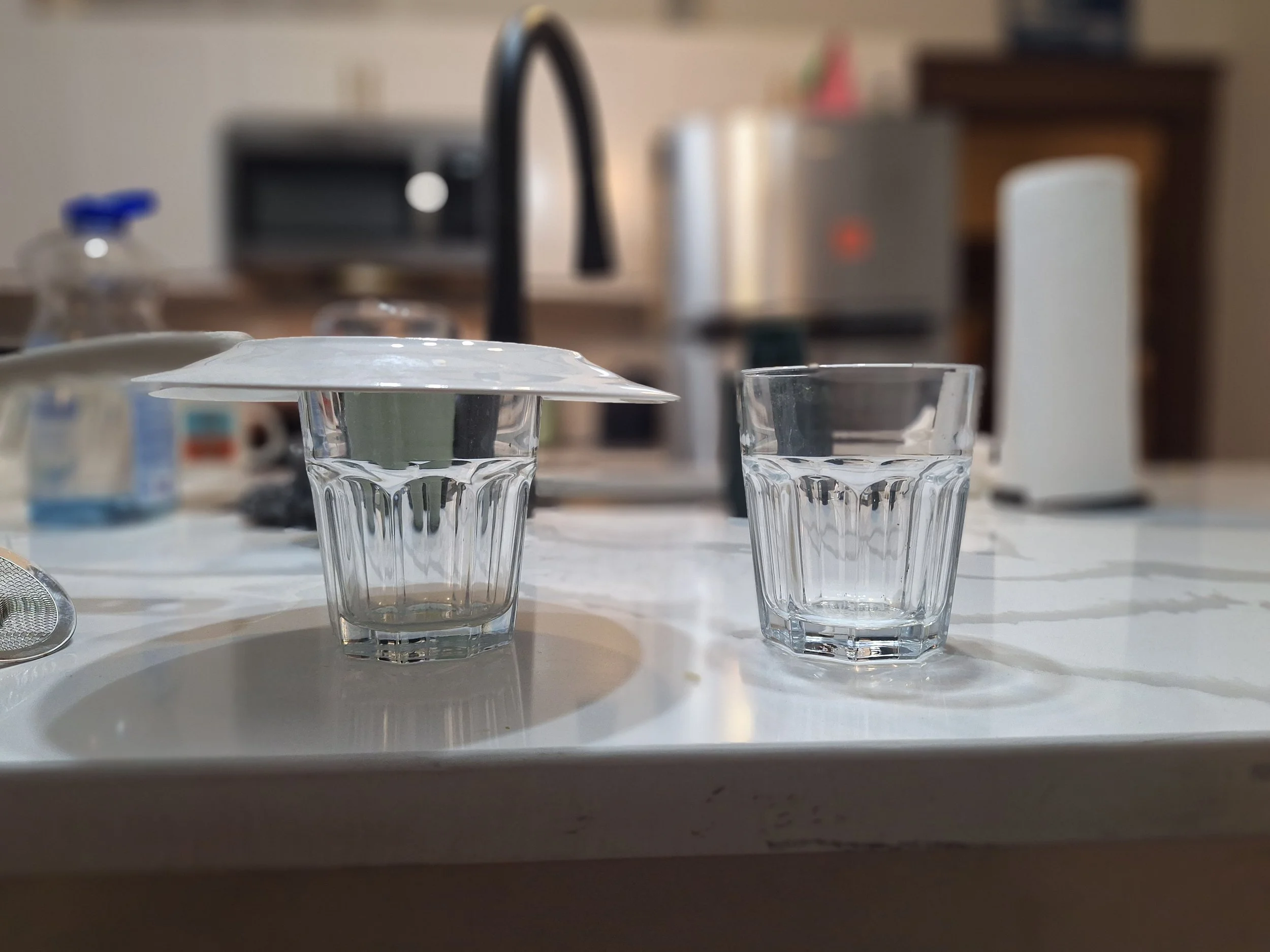
After the steeping time, I strained the tea and poured one cup into each of two cups. I covered one cup with a ceramic plate and left the other open for three minutes.
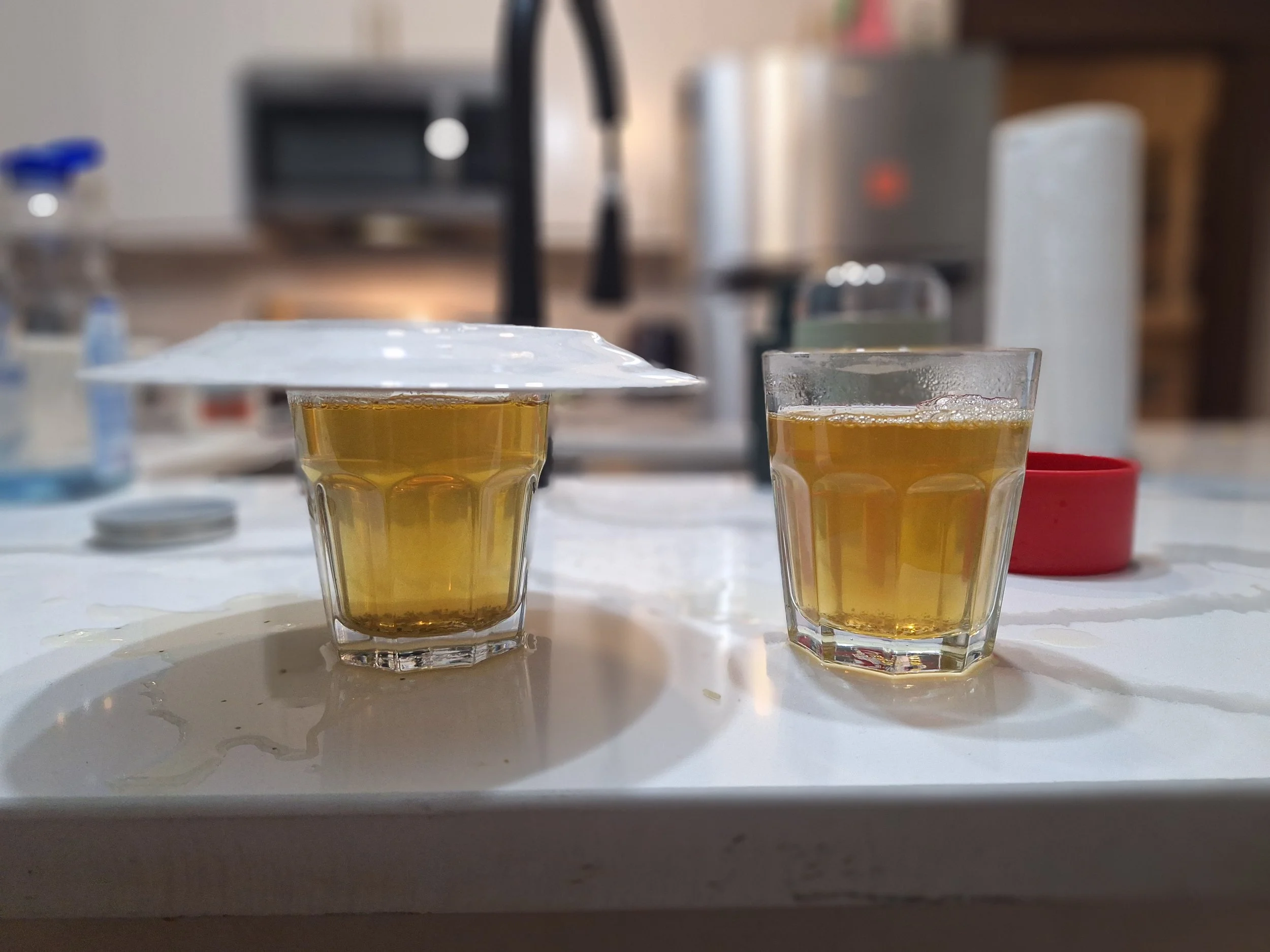
I then had two roommates rate aroma, bitterness, and enjoyment without expecting the resulting taste.
Results
The most consistent results contradicted my initial hypothesis. Both tasters gave the covered tea high enjoyment scores and lower bitterness. The biggest difference between the teas was during the one-minute steep trial.
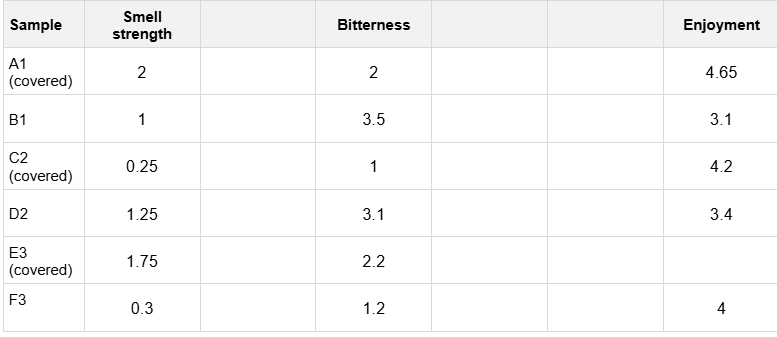
Although the tasters perceived differences in bitterness and enjoyment, the samples remained visually similar.
Aroma, according to my roommates, showed no clear pattern. Both rated the covered tea as more aromatic in the one-minute steeping trial. One roommate called the covered two-minute tea the least flavorful but still personally enjoyed it. There was also little difference in color despite the coverage and taste differences. The storage observations were also rather limiting. We believed the jarred tea seemed to be more aromatic than the packaged tea, but there was no substantial difference.
Historical and Modern Standards of Taste
The experiment reinforced Xu's argument that, in Yuan's view, literati quality was not equivalent to the strength of the tea.[13] My roommates defined tea by its low bitterness, while Yuan valued a more complex blend of clarity and sweetness. The meaning of "good taste" is subjective, especially when exploring a historical work in a modern context.
My approach to this rework shows how modern methods can shape the reconstruction of historical recipes. I approached the tea in a more modern, quantitative way: I fixed the ingredient amounts, separated steeping times, and asked for comparisons of the tea's properties in hopes of emulating the assumed expertise and practical knowledge Yuan Mei would have in brewing.
Yuan's work seems to push for a practiced and tacit understanding of tea quality. Again, Yuan valued clear fragrance alongside careful timing and suitable water. To him, quality depended not only on the relationship of the ingredients during the process, but also on how the drinker perceived it.[14]
Improving the Reconstruction
I think a good future reconstruction would hold the steep time constant, measure the temperature of the tea being served, and include a sample consumed at different times after brewing.
Furthermore, I think the rating form should include fragrance, aftertaste, and other variables beyond bitterness and subjective enjoyment. While this would not, of course, completely recreate Yuan Mei's sensory expectations and values, it would better connect to the properties he focused on in his texts.
Reworking Historical Craft
In the trials, my roommates preferred the covered samples because they found them less bitter. Yuan may not have judged the samples solely by bitterness. My ratings did not specify sweetness or other variables.
These categories were convenient for modern testing but did not fully reproduce Yuan's standards, given the specific scoring system. I think this process highlights the challenges of recreating certain historical practices.
Simply following the recipe cannot produce results with complete accuracy when some degree of assumed knowledge is involved. Many unknown concepts of the process may have been known to the intended audience at the time. Although my steps and rating allowed for clear comparison, it is imperative to understand that these interpretations are separate from Yuan's methods.
Conclusion
Reworking Yuan Mei's tea instructions helped me better understand the difficulties of recreating cuisine. While I can recreate his practical instructions, I cannot truly understand his sensory beliefs and opinions.
This project confirmed that craft knowledge includes both written instructions and personal judgment and cultural beliefs about what is considered high quality.
Footnotes
[1] Yuan Mei, Recipes from the Garden of Contentment: Yuan Mei’s Manual of Gastronomy, translated and annotated by Sean J. S. Chen (Great Barrington, MA: Berkshire Publishing Group, 2018), 381.
[2] Nicole Mones, foreword to Yuan Mei, Recipes from the Garden of Contentment.
[3] Chen, “Translator’s Note,” xviii–xix.
[4] Yuan Mei, Recipes from the Garden of Contentment, 52-55.
[5] Yuan, Recipes from the Garden of Contentment, 381.
[6] Yuan, Recipes from the Garden of Contentment, 381.
[7] Yuan, Recipes from the Garden of Contentment, 385.
[8] Guanmian Xu, “Pepper to Sea Cucumbers: Chinese Gustatory Revolution in Global History, 900–1840” (PhD diss., Leiden University, 2021), 162–63.
[9] Andrew Schonebaum, Observing the Unseen: Curiosity and Common Knowledge in Early Modern China (Seattle: University of Washington Press, 2026), chap. 4.
[10] Yuan, Recipes from the Garden of Contentment, 381.
[11] Yuan, Recipes from the Garden of Contentment, 381.
[12] Yuan, Recipes from the Garden of Contentment, 381–83.
[13] Xu, “Pepper to Sea Cucumbers,” 162–63.
[14] Yuan, Recipes from the Garden of Contentment, 381–83, 385; Schonebaum, Observing the Unseen, chap. 4.
Bibliography
Mei, Yuan. Recipes From the Garden of Contentment : Yuan Mei’s Manual of Gastronomy. Berkshire Publishing Group, 2018.
Schonebaum, Andrew. Observing the Unseen: Curiosity and Common Knowledge in Early Modern China. University of Washington Press, n.d. Accessed November 24, 2026. https://uw.manifoldapp.org/projects/observing-the-unseen.
Xu, G. “Pepper to Sea Cucumbers: Chinese Gustatory Revolution in Global History, 900-1840.” Handle.Net, November 10, 2021. https://hdl.handle.net/1887/3239180.