Abstract
Oil-based perfume was used in historical China for fragrance, as well as skin and hair care. Qimin Yaoshu, a sixth-century Chinese agricultural text, records a recipe for making xiangze (香泽), a scented balm made with aromatic plants, sesame oil, animal fat, and rice wine. The recipe describes several stages of production, including soaking fragrant herbs, heating them with oils and fats, and filtering the mixture. For this project, I plan to reconstruct xiangze using accessible ingredients and common kitchen equipment. I will follow the historical preparation methods while substituting certain herbs with similar aromatic plants available in modern grocery stores. Through this hands-on reconstruction, I hope to explore the role of scented cosmetics in everyday life in historical China and understand the practical knowledge involved in their production. I will also examine how differences between historical and modern ingredients influence the final product.
Primary Source & Reconstruction Plan
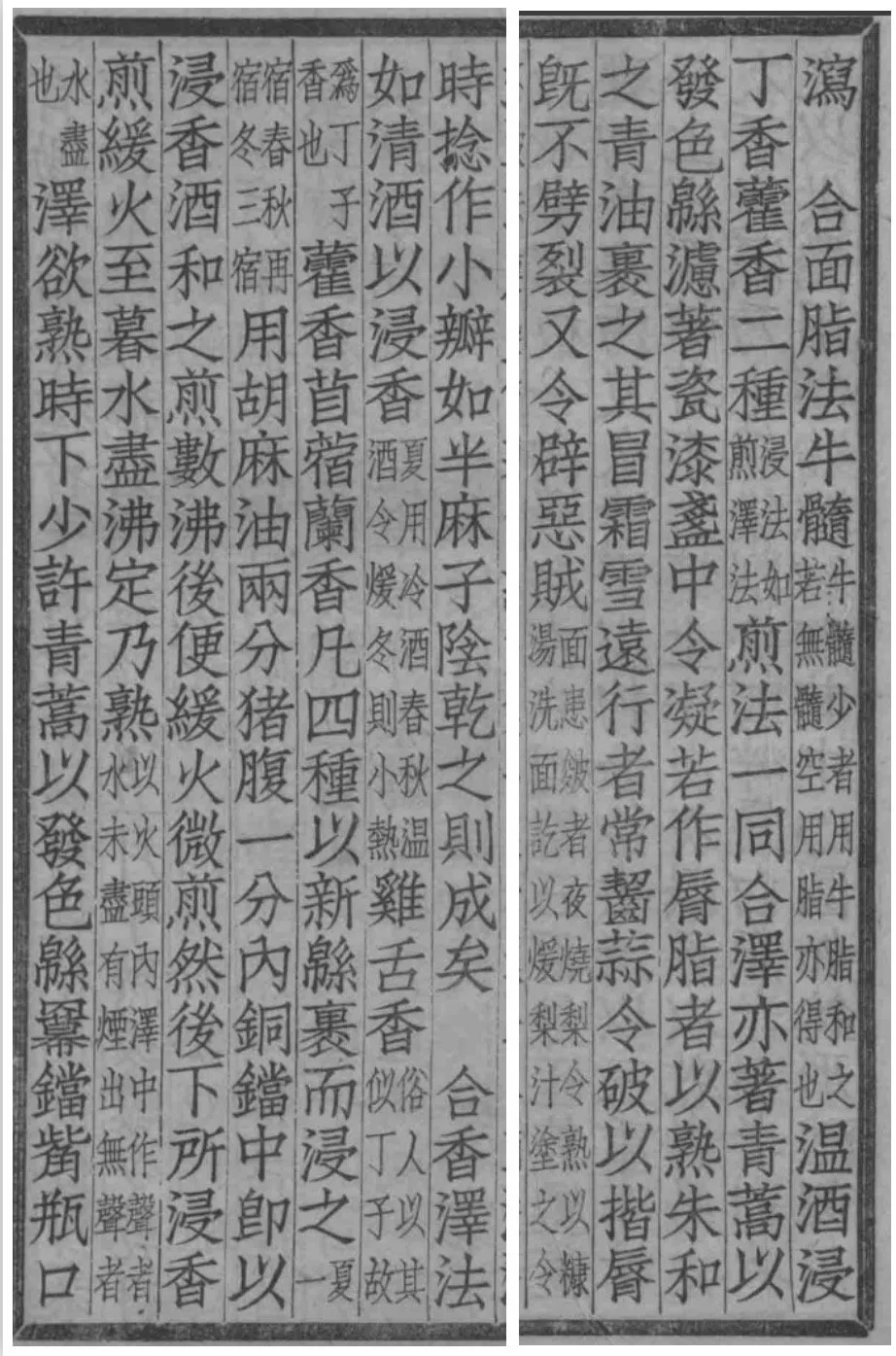
《齐民要术》(Qimin Yaoshu)
“合香泽法:好清酒以浸香。夏用冷酒,春秋温酒令暖,冬则小热。鸡舌香、俗人以其似丁子,则为丁子香也。藿香、苜蓿、兰香,凡四种,以新绵裹而浸之。夏一宿,春秋再宿,冬三宿。用胡麻油两分,猪腹腹宜作匡或胰。一分,内铜铛中,即以浸香酒和之,煎数沸后,便缓火微煎,然后下所浸香煎。缓火至暮,水尽沸定,乃熟。以火头内泽中:作声者,水未尽;有烟出无声者,水尽也。泽欲熟时,下少许青蒿以发色,以绵幂铛嘴瓶口泻。”
“合面脂法:用牛髓。〈牛髓少者,用牛脂和之。若无髓,空用脂亦得也。〉温酒浸丁香、藿香二种。〈浸法如煎泽方。〉煎法一同合泽,亦著青蒿以发色。绵滤著瓷、漆盏中令凝。”
Translation: Use good-quality rice wine to soak the aromatic ingredients. Use cold wine in summer, warm wine in spring and autumn, and slightly heated wine in winter. Take four aromatic ingredients: jishesxiang (鸡舌香, clove), huoxiang (藿香), muxu (苜蓿), and lanxiang (兰香). Wrap them in fresh cotton and soak them in the wine for one night in summer, two nights in spring and autumn, or three nights in winter. Combine two portions of sesame oil with one portion of pork fat in a copper pot. Add the wine used for soaking the herbs and bring the mixture to a boil several times. Reduce the heat and simmer gently, then add the soaked aromatic ingredients. Continue heating over low heat until evening, when the water has evaporated and the boiling subsides. Crackling indicates remaining water, while smoke without crackling indicates that the water has evaporated. Shortly before the preparation is finished, add a small amount of qinghao (青蒿) to develop its color. Finally, strain the mixture through cotton cloth into a storage bottle.
Translation: Use ox bone marrow. If there is not enough marrow, mix it with beef fat. If no marrow is available, beef fat alone can also be used. Soak two aromatic ingredients, cloves and huoxiang (patchouli), in warm wine. Follow the same soaking method described in the previous recipe for making fragrant hair oil. The heating and preparation process is also the same as that used for fragrant hair oil. Add a small amount of qinghao (sweet wormwood) to develop the color. Filter the mixture through cotton cloth and pour it into a porcelain or lacquered container. Allow it to cool and solidify.
Ingredients
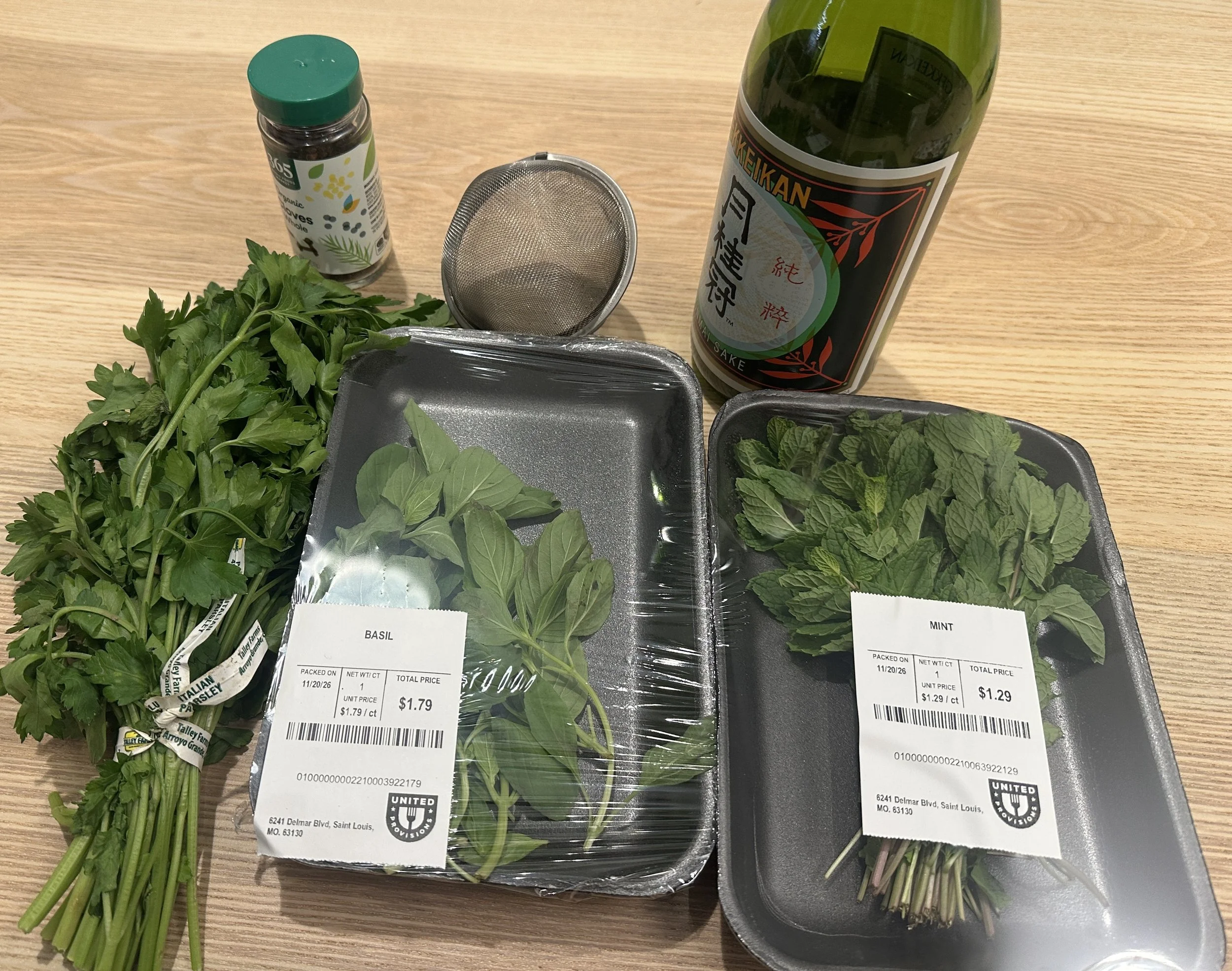
Qingjiu (清酒) → Japanese Sake: fermented rice wine, 200mL
Ding xiang (丁香) → Cloves
Huoxiang (藿香) → Substituted with Mint: Both in Lamiaceae family and are aromatic
Muxu (苜蓿) → Substituted with Parsley
Lanxiang (兰香) → Basil
Seasame Oil/Pork fat/Ox fat (麻油/猪腹/牛脂) → Substituted with Butter, to simplify recipe and get solid product, 113g
Reconstruction Procedure
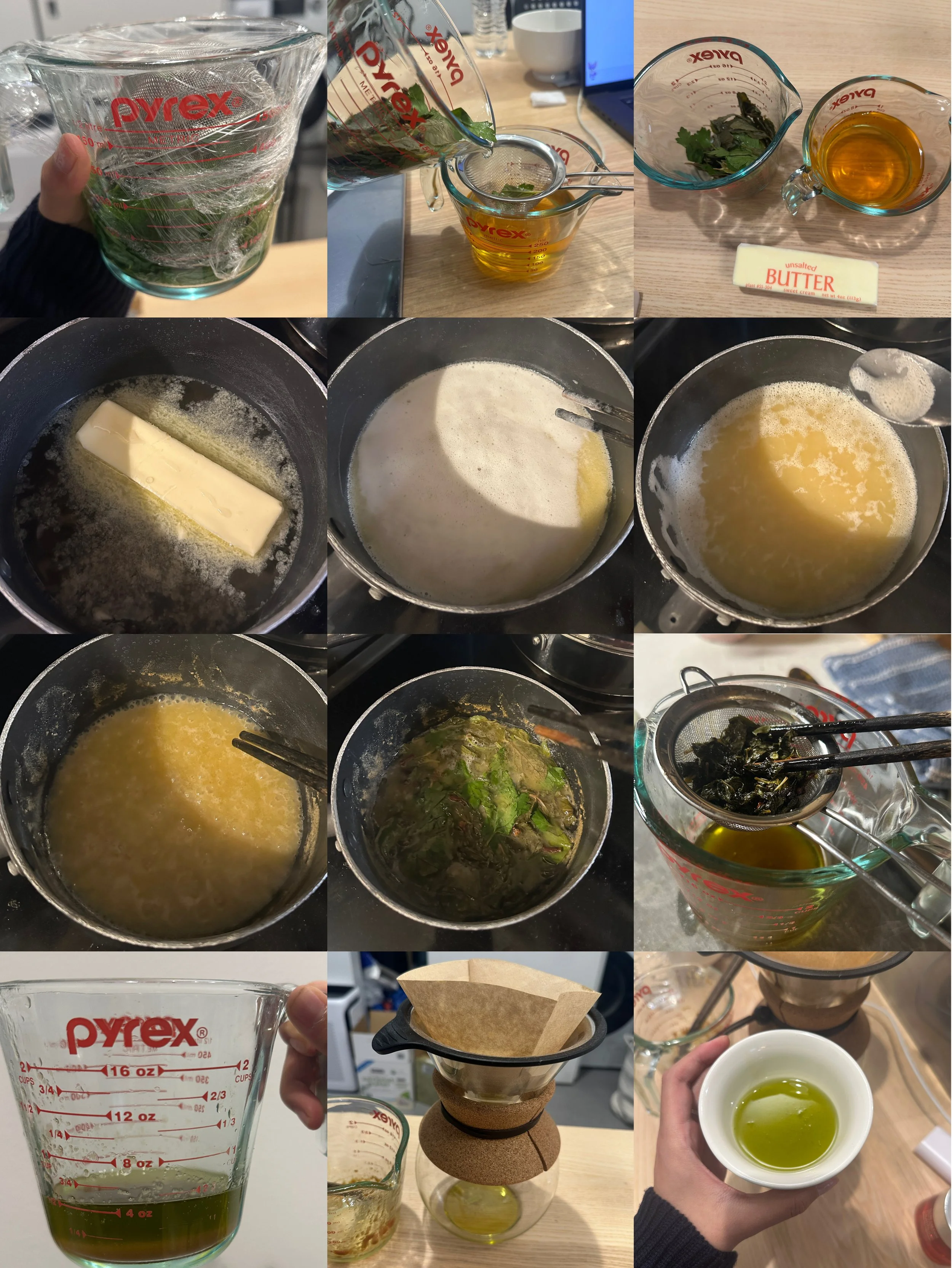
Prepare the aromatic ingredients according to the recipe, purchase from Asian supermarkets
Soak the herbs in warm rice wine (sake) for 2 nights, at room temperature of ~25 °C
Mix oil and rice wine in a sauce pan and heat until slightly boiling, then change to low heat
Add solid plant materials to sauce pan, continue to gently heat
When moisture is mostly gone, add qinghao (or similar vegetable) in small pieces
Continue to heat until all moisture is gone, which is when the oil start to smoke
Filter the oil into a prepared container as the final product, allow it to cool and evaluate its fragrance, color, and texture
Conclusion
Challenges
Unclear ratio between herbs, and of wine to oil
Some original herb ingridient mentioned in the recipe was unable to be found
Controlling the heat was more difficult than expected.
Determining when all the water had evaporated required careful observation and experience.
Key Takeaways
This project helped us understand how people in ancient China extracted fragrances from natural ingredients, which was overall successfully replicated.
These fragrances could be incorporated into various cosmetic products, such as hair oils, facial balms, and lip products, which could also help protect the skin and lips from dryness and cracking.
Although the preparation process was relatively straightforward, practical experience was important for controlling the heat and determining when the water had fully evaporated.
Most ingredients were relatively inexpensive and accessible today, but animal fats may have been more valuable in ancient times. Therefore, producing these cosmetics in larger batches for sale might have been more economical than making them individually in each household.
