"It's Worth Dying For!": Pufferfish Cooking in Premodern China
Introduction
Pufferfish has long occupied a peculiar place in Chinese culinary culture for its flavor as well as its potentially lethal toxicity. As most of us are aware, if not processed properly before consumption, pufferfish might actually be poisonous enough to be deadly. And yet, historical accounts reveal that, to many people, eating pufferfish could be considered worth the risk. In a widely circulated anecdote, the Song-dynasty poet Su Shi (苏轼), himself renowned for his appreciation of food, is said to have eaten pufferfish at a banquet before declaring it “worth dying for.” Whether or not the anecdote preserves Su Shi’s exact words, given that the wording varies from source to source, it points to the tension between the desired taste and the inherent danger of pufferfish consumption. In response to such danger, Chinese people developed many ways of preparing the fish, including methods intended to remove or counter its poison. These practices raise questions not only about the techniques involved in preparing pufferfish, but also about the knowledge behind them. What ingredients and methods did historical cooks employ, and how did they understand the relationship between preparation, flavor, and toxicity? Moreover, as culinary practices developed within particular regional contexts, the preparation of pufferfish may also reveal how local ingredients and knowledge shaped food traditions. By examining historical Chinese accounts of pufferfish cookery, this paper attempt to explore the preparation methods and culinary knowledge recorded in these texts, as well as what they reveal about the relationship between culinary craft, regional food culture, and historical understandings of the fish’s toxicity.
Preparing the Fish
On preparing pufferfish, Zhuyu Shanfang Zabu (竹屿山房杂部) provides a detailed description of the cooking process ①. In its section “Cooking Pufferfish” (烹河豚), the text begins by specifying the second lunar month as the time for preparing pufferfish. [1] It also states that pufferfish are suitable for sun-drying and for braising in soy sauce. When prepared with light-braising, it may be cooked in the same manner as carp. The book then instructs the cook to remove the fish’s eyes, roe, tail fins, blood, and smaller fins near its gill, emphasizing that the fish must be washed and cleaned thoroughly ②. After cutting the fish into pieces, one should first boil it thoroughly in water, then counter its toxins with sugarcane and lugen ③, as well as using lychee shell to soften its bones. More water is added, and the ingredients are boiled together again before pepper, Sichuan pepper, scallion whites, soy sauce, and vinegar are added for seasoning. The recipe also warns against soot and jingjie ④.
This recipe presents pufferfish preparation as a process involving several distinct stages, from removing particular body parts to repeated cooking and seasoning. Its instructions also assign ingredients to different functions in the preparation process. While pepper, Sichuan pepper, scallion whites, soy sauce, and vinegar are introduced for seasoning, sugarcane and lugen are explicitly described as substances used to counteract the fish’s poison. A similar concern with the relationship between preparation and toxicity appears in Bencao Gangmu (本草纲目) by Li Shizhen (李时珍), where an illustrated representation of pufferfish (Figure 1) is also included to provide a visual complement to the text’s written discussion of the fish. A significant part of his discussion on pufferfish focuses on the poinsonous nature of it and ways to safely consume it. The book warns its reader to beware of its danger, and moves on to provide a list of herbs that are believed to be able to neutralize its poison:
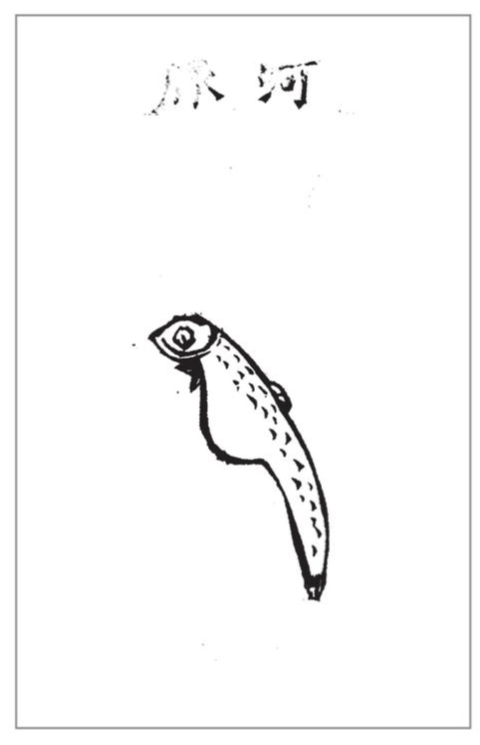
Figure 1. An illustration of pufferfish.
Li, Bencao Gangmu本草纲目. Scales IV. Fish without Scales鳞之四无鳞鱼二十八种 [2]
"Their flavor may be delicate and delicious, but if they are not prepared accordingly, eating them will kill one. Those who value their life will stay away from them. [Chen] Cangqi: Those from the sea, they are very poisonous. Those from rivers a little less. When they are boiled, they must not touch [the metal of] the cooking pot; rather, they are to be suspended in it. [Li] Shizhen: When boiling them, see to it that no soot drops into [the pot]. [Ingested together with] schizonepeta [spikes], chrysanthemum flowers, platycodon [root], glycyrrhiza [root], aconitum [accessory tuber] and aconitum [main tuber], they are opposed to their [effects]. They correspond with lycopus [root], lou-artemisia and Japanese rumex. They fear [the effects of] Chinese olives, sugarcanes, reed roots and fecal liquid." [2] [3]
At the same time, it is worth noting that Bencao gangmu does not present all these beliefs as consistent. It also records conflicting instructions concerning jingjie. One account claims that boiling pufferfish with jingjie and changing the water after several boils can remove its poison, whereas another warns against combining the two. The text ultimately advises readers to follow the more cautious account. This disagreement reveals that historical knowledge about pufferfish preparation was not necessarily unified. Instead, the text preserves competing claims about toxicity and cooking practices while attempting to determine which instructions should be followed.
Regional Practice
By the Song dynasty, pufferfish had become an established delicacy in parts of southeastern China. Historical accounts of its consumption reveal not only an appreciation for its flavor, but also a body of culinary knowledge associated with its preparation. Yuyin Conghua (渔隐丛话), a collection of poetry and prose written in the late Song dynasty by Hu Zi (胡仔), documented discussions of pufferfish consumption in the south.[1] Documents predating Hu Zi's work appear to disagree on whether pufferfish are poisonous, though Hu Zi takes a firm stance, believing that they are. Quoting Juanyou Zalu (倦游杂录), he records that pufferfish is highly toxic, and that consuming its liver and roe would be fatal. If not cooked thoroughly and consumed, it may also cause harm. Hu Zi also notes that the people in southern parts of China were still fond of eating pufferfish, even if there were people dying from it every year; the fish remained as a seasonal delicacy in the Jianghuai region. One important thing to note in this text is the seasonal quality of pufferfish. According to Hu Zi and his quote from Juanyou Zalu, the fish is the most fat during late spring, when diya ⑤ are growing. At the same time, Hi Zi also recored Su Shi's poem, which describes the season when pufferfish return to rivers from the sea as a season when louhao ⑥ and diya are thriving everywhere. The significance of these two herbs mentioned here in pufferfish preparation becomes clearer in another account quoted by Hu Zi, from Zhang Wenqian’s (张文潜) Mingdao Zashi (明道杂志). Zhang reports that when he was in Danyang and Xuancheng, he observed that local households cooked pufferfish with louhao, diya, and cabbage, and that no one had been seen dead after eating this fish soup, despite the fish’s reputation for toxicity.
There is no direct or scientific evidence showing that incorporating these herbs into the process of cooking pufferfish is effective in detoxifying the fish, but we can reasonably infer from these documented combinations that their use was a common practice and that the cooking of pufferfish was rooted in regional and seasonal ingredients. In other words, eating pufferfish was part of a culinary tradition influenced by the local environment, the availability of ingredients, and the knowledge associated with preparing them. On the same note, according to “Seeking a Deadly Delicacy: Pufferfish, Regional Gastronomy, and Pharmacology in Middle Period China,” a paper by Zihan Guo, the use of herbal ingredients in the pufferfish soup that Zhang observed in southeastern towns was more about “‘blending and harmonizing’ (tiaohe, 調和) and being able to properly season fish stew with mugwort” than detoxifying the fish.[2] It is also noted in the paper, that the locals were able to distinguish poisonous pufferfish from those that are not, which may also be why the southerners were not harmed by consuming pufferfish. This distinction is important because it suggests that the ingredients used in pufferfish preparation should not be understood merely in terms of their presumed medicinal functions. Their use also reflected culinary preferences and regional knowledge of how to prepare and season the fish. At the same time, as Guo identifies, aside from the cooking process itself, the craft of cooking pufferfish also involves the process of identifying and avoiding poisonous ones; pufferfish cookery thus involves a broader range of knowledge.
Conclusion
Historical Chinese accounts of pufferfish cookery reveal a culinary craft shaped by both the pursuit of flavor and the concern over toxicity. The detailed instructions in Zhuyu Shanfang Zabu present preparation as a series of deliberate steps, from cleaning the fish and removing particular body parts to repeated cooking and the use of specific ingredients. Meanwhile, Bencao Gangmu records both warnings about the fish’s danger and conflicting claims about how its poison might be counteracted, demonstrating that historical knowledge of pufferfish preparation was not always consistent. The accounts preserved in Yuyin Conghua further show how pufferfish consumption was embedded in regional and seasonal food traditions, with local ingredients such as louhao and diya appearing alongside the fish in descriptions of its preparation. Taken together, these texts suggest that pufferfish cookery drew on practical techniques, beliefs about ingredients and toxicity, and knowledge associated with particular places and seasons. Although these historical accounts cannot establish whether the recorded methods could actually neutralize the fish’s poison when examined with modern standards, they reveal how people approach a dangerous yet prized delicacy.
Notes
① Translations of the primary texts, unless specified in the citation page, are in my own words, since it is difficult to find existing translations for some of these texts.
② “二月用河豚剖治,去眼、去子、去尾鬣血等,务涤甚洁,切为轩。”
③ 芦根. Often translated as reed root.
④ 荆芥. A kind of catnip.
⑤ 荻芽, also known as 芦芽, sometimes translated as lycopus root. An herb that resembles reed or bamboo shoots. I have seen both claims, and it is unclear which is more accurate.
⑥ 蒌蒿. Artemisia, sometimes translated as mugwort.
Bibliography
[1] Song Xu宋诩. Zhuyu Shanfang Zabu竹屿山房杂部. Book 4卷四. Shidianguji识典古籍. https://www.shidianguji.com/book/SK1926/chapter/1llqnvb3azyn6
[2] Li Shizhen李时珍. Bencao Gangmu本草纲目. Scales IV. Fish without Scales鳞之四无鳞鱼二十八种. Shidianguji识典古籍. https://www.shidianguji.com/book/SK1491/chapter/1l94kkj55qzoi
[3] Li Shizhen, Ben Cao Gang Mu, Volume VIII: Clothes, Utensils, Worms, Insects, Amphibians, Animals with Scales, Animals with Shells, trans. Paul U. Unschuld (University of California Press, 2021), pp.438-471.
[4] Hu Zi胡仔. Yuyin Conghua渔隐丛话. Book 24 卷第二十四. Shidianguji识典古籍. https://www.shidianguji.com/ens/book/NA14509/chapter/1m8sd1z9e1qur
[5] Zihan Guo, “Seeking a Deadly Delicacy: Pufferfish, Regional Gastronomy, and Pharmacology in Middle Period China,” Journal of Chinese History (2026), 10, pp.499, https://doi.org/ 10.1017/jch.2026.10115